View All
Reno County Commissioners Review Salt Lick Resort Proposal and County Workforce Challenges During Study Session
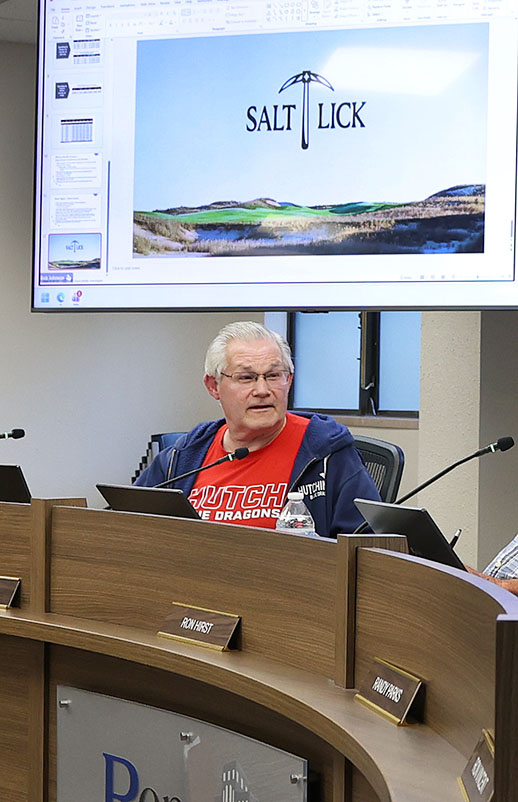
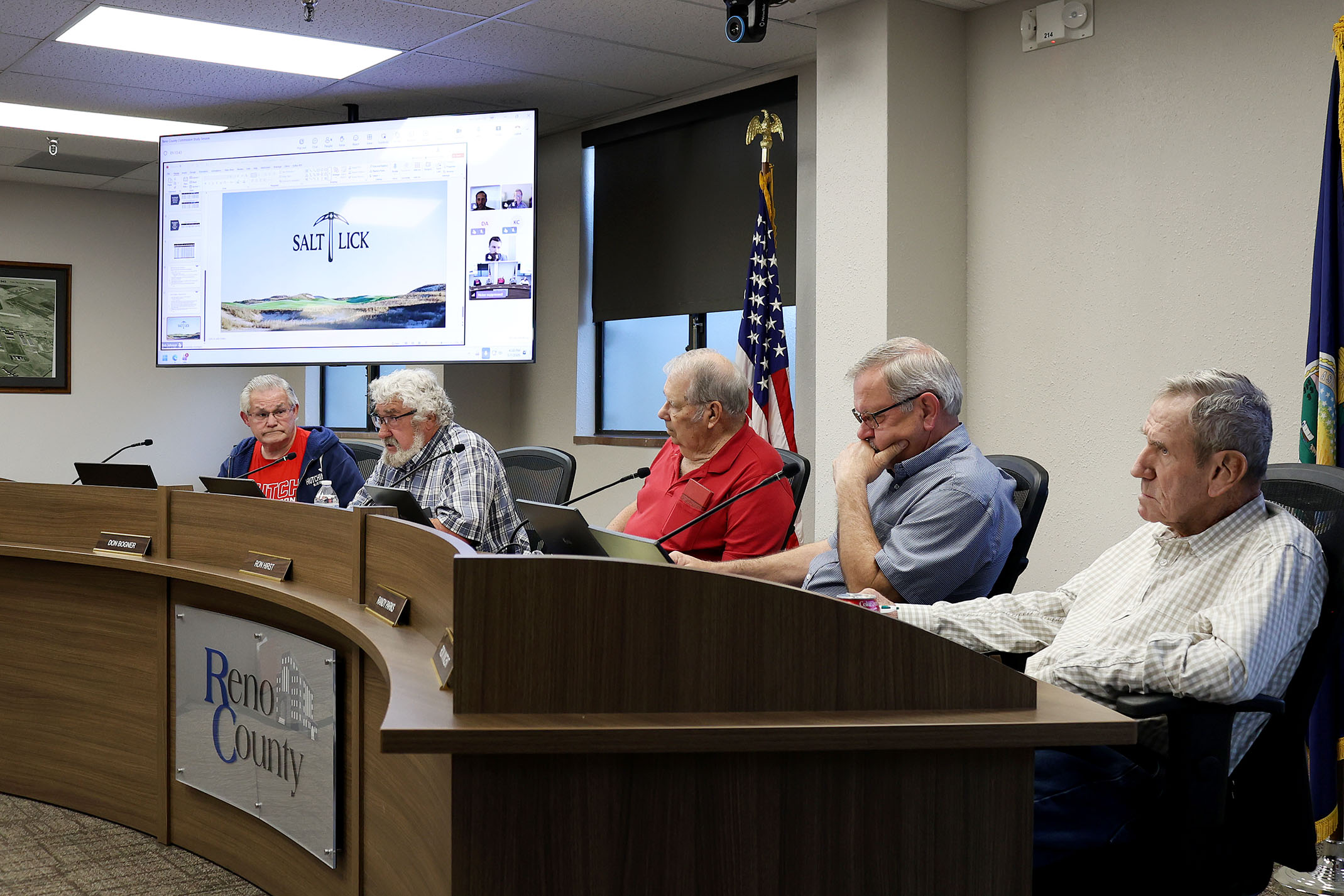
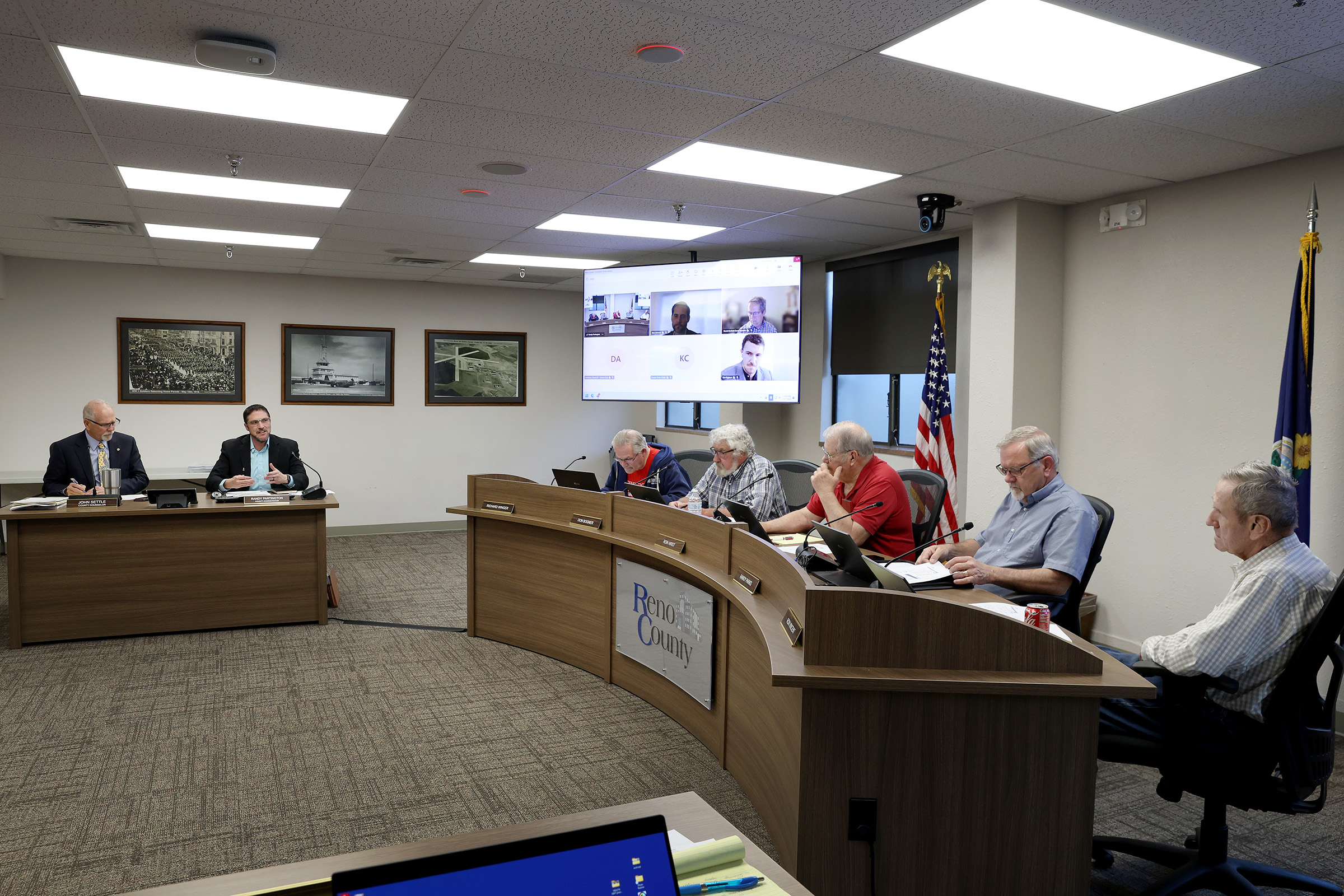 Reno County Commission held a study session on Thursday, May 7, 2026, at 4 pm. From left: Counselor John Settle, Administrator Randy Partington, Commissioners Richard Winger, Don Bogner, Ron Hirst, Randy Parks and Ron Vincent.
Reno County commissioners spent an extended study session Thursday, May 7, 2026, reviewing plans for the proposed Salt Lick Golf Resort development while also discussing county employee recruitment and retention challenges that officials say continue to affect multiple departments.
The meeting combined in-person discussion with several project representatives appearing remotely on the Microsoft Teams screen inside the commission chambers, joining virtually to share project details and answer questions related to financing, tourism impacts, water usage, and economic development projections.
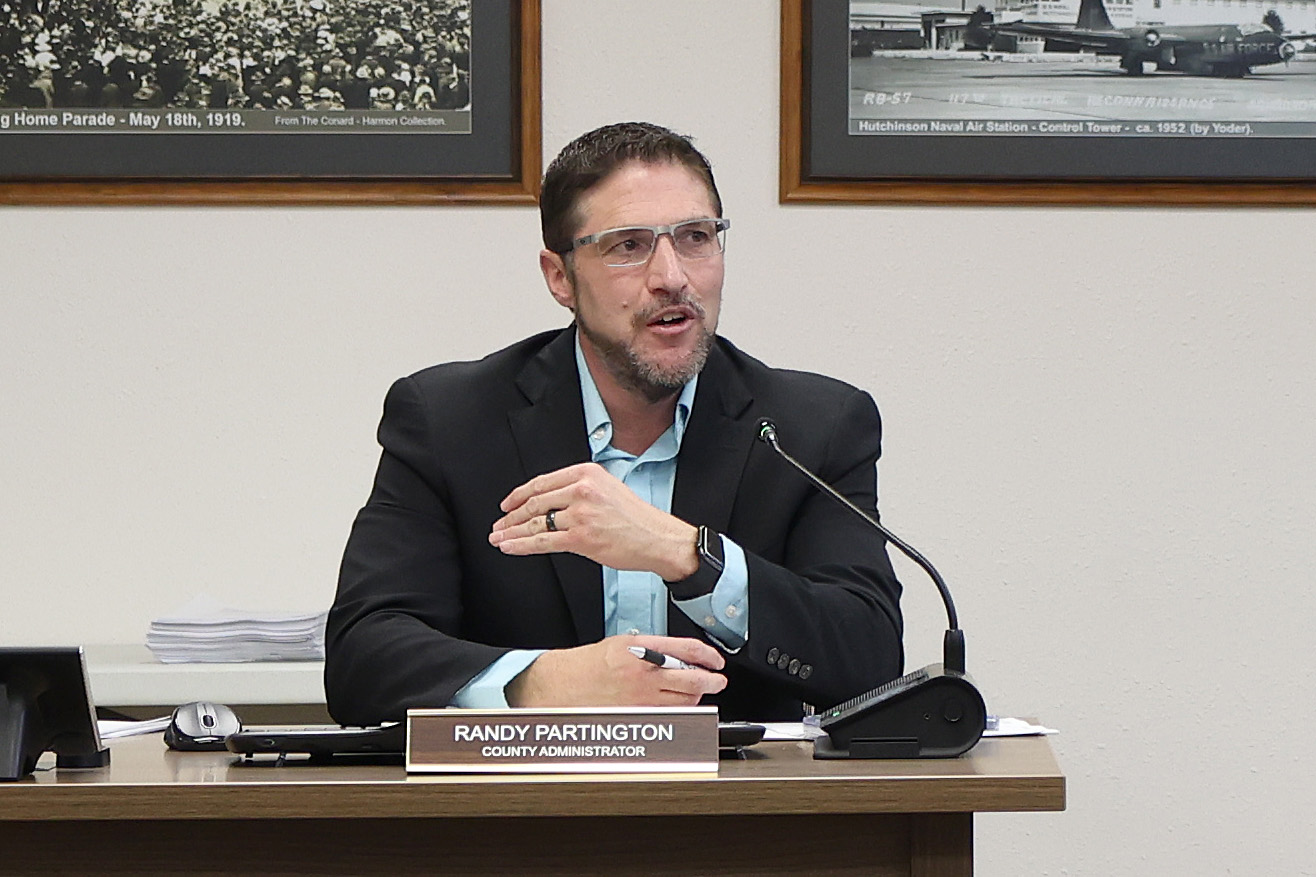 Administrator Randy Partington
County Administrator Randy Partington opened the discussion by introducing the development team and describing the project as a significant opportunity for Reno County tourism and economic growth.
“This will be a great venue for Reno County, for visitors from all across the country.” — Randy Partington
Project attorney Bob Johnson led much of the presentation from the Teams screen, sharing slides outlining the three-phase resort development plan and the financing structure proposed to support the nearly $80 million project.
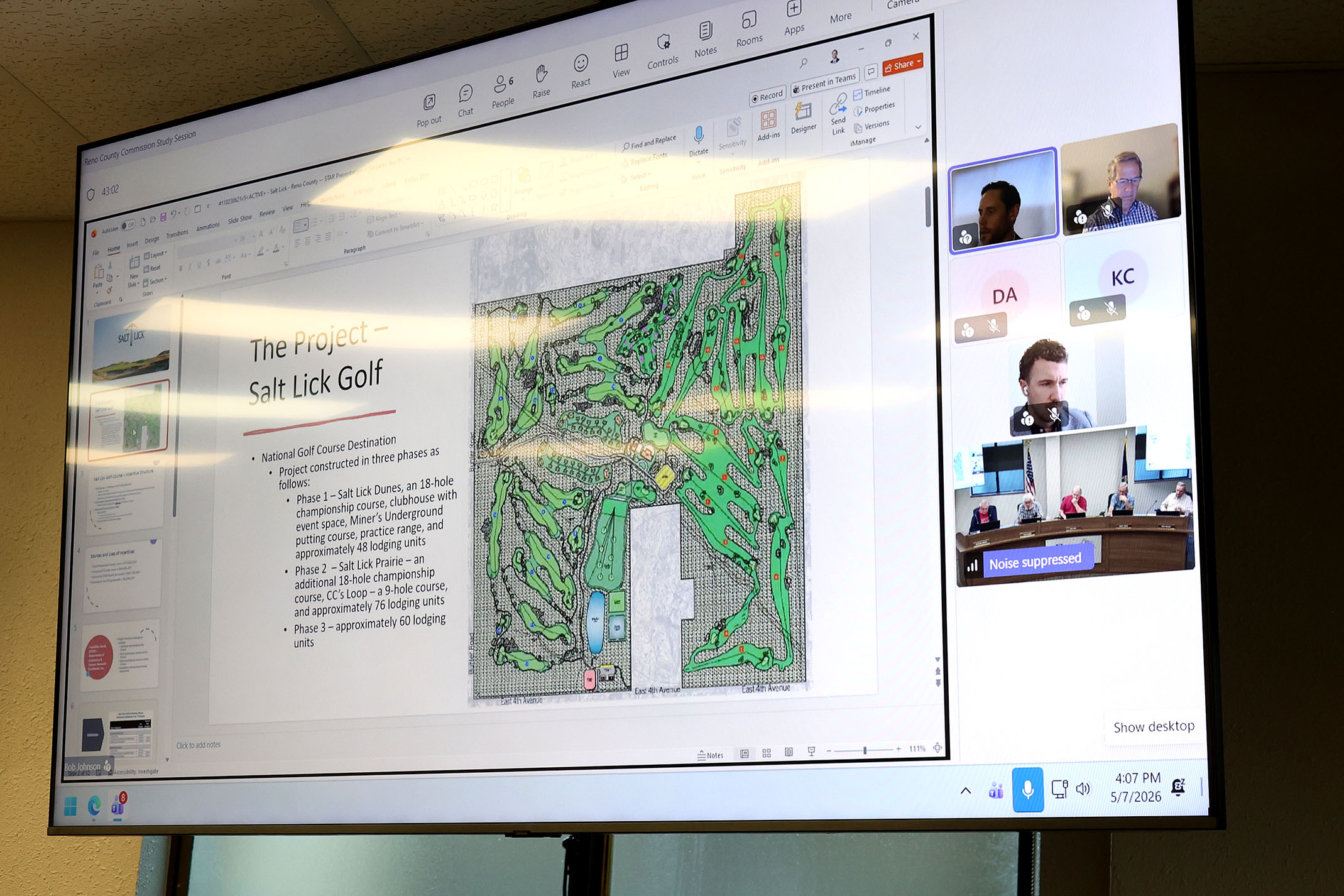 The computer screens included a Salt Lick Golf Course presentation and project representatives participating virtually.
Salt Lick Golf Resort Development
Developers described the Salt Lick project as a destination golf resort designed to attract visitors from across Kansas and beyond.
Proposed Project Features
- Championship golf courses
- Clubhouse and event space
- Dining and retail areas
- Lodging accommodations
- Practice facilities
- Recreational putting course
Planned Development Phases
Phase 1
- “Salt Lick Dunes” 18-hole championship course routed through rolling sand dunes
- Clubhouse with event and dining space
- Night-lit putting course
- Practice facilities
- Approximately 48 lodging units
Phase 2
- Second championship 18-hole golf course "Salt Lick Prairie" through more open, prairie-style layout
- Additional 9-hole course "CC's Loop" for accessibility, match play and repeat rounds
- Expanded lodging of 76 units
Phase 3
- Approximately 60 additional lodging units
Johnson explained that having multiple golf course options and overnight lodging is critical for attracting multi-day visitors and establishing the project as a true tourism destination.
Financing and Economic Development Discussion
A major portion of the study session focused on the financing tools proposed for the project.
Financing Tools Under Consideration
- STAR Bonds
- Community Improvement District (CID)
- Industrial Revenue Bonds (IRBs)
- Transient Guest Tax (TGT)
Johnson explained that STAR Bonds would be repaid using only new tax revenue generated by the development itself.
“Without the project, there wouldn’t be any sales tax. There’s none there today.” — Bob Johnson
He emphasized that:
- Existing county tax dollars would not be diverted
- Reno County would not be financially liable for repayment
- Bond repayment would rely solely on new project-generated revenue
Commissioners discussed how the project-generated sales tax would be committed to bond repayment during the statutory bond period, while also acknowledging the broader tourism and economic development potential the project could bring to the county.
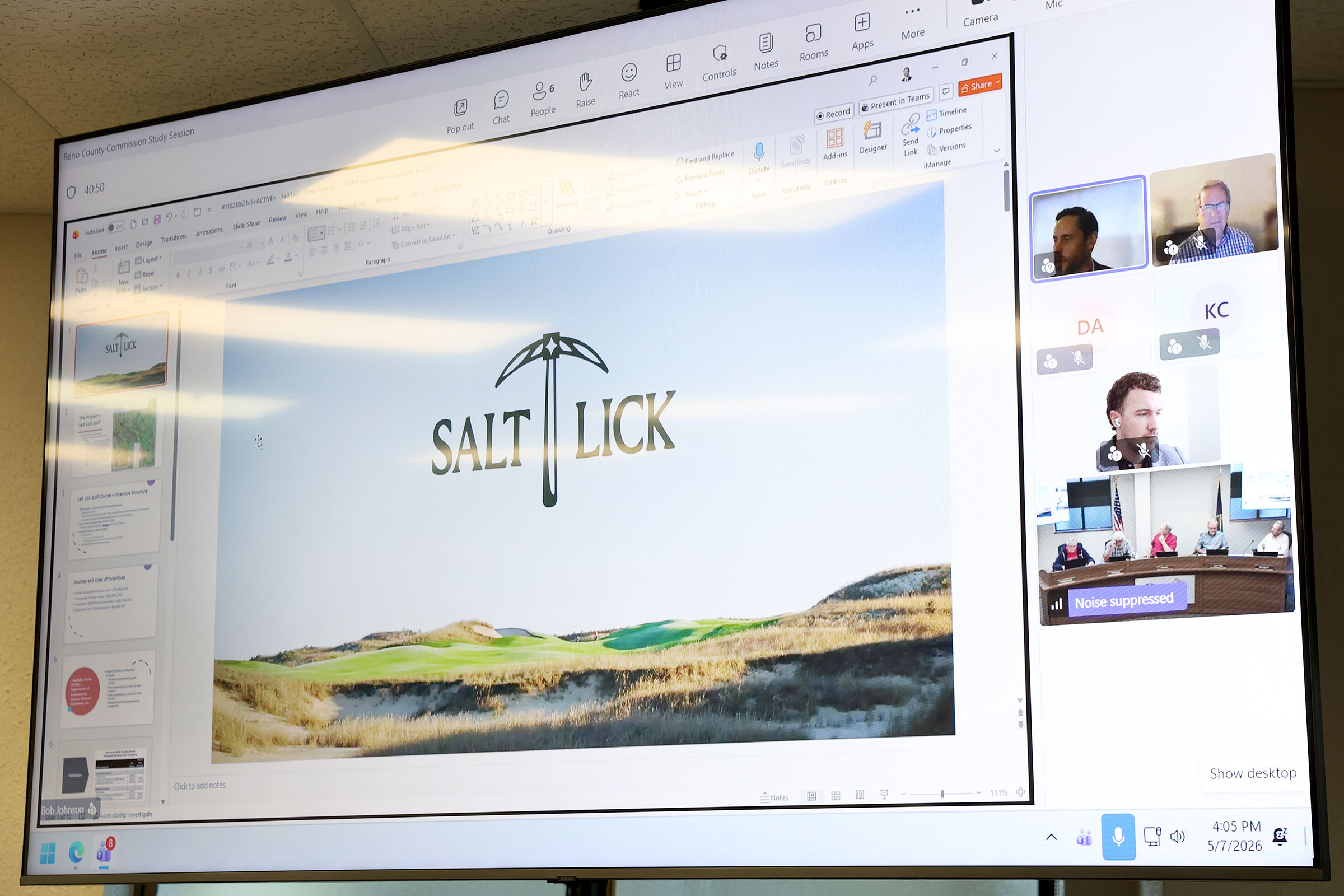 The computer screens included a Salt Lick Golf Course presentation and project representatives participating virtually.
Commissioners also highlighted the importance of the developer’s private investment in the project.
“There’s one thing that we haven’t mentioned much, and that’s the fact that this group is putting $44.9 million of their own funds into this project.” — Commissioner Ron HIrst
Tourism and Visitor Impact Projections
The Kansas Department of Commerce feasibility study presented during the meeting projected strong tourism activity tied to the development.
Feasibility Study Estimates
- More than 50,000 annual visitors
- Significant out-of-state tourism
- Approximately $23–25 million in annual visitor spending
- Strong debt service coverage for STAR Bonds
Developers said the project is designed specifically to attract tourism traffic and increase overnight stays in Reno County.
Commissioners noted the value of creating additional destination attractions within the county.
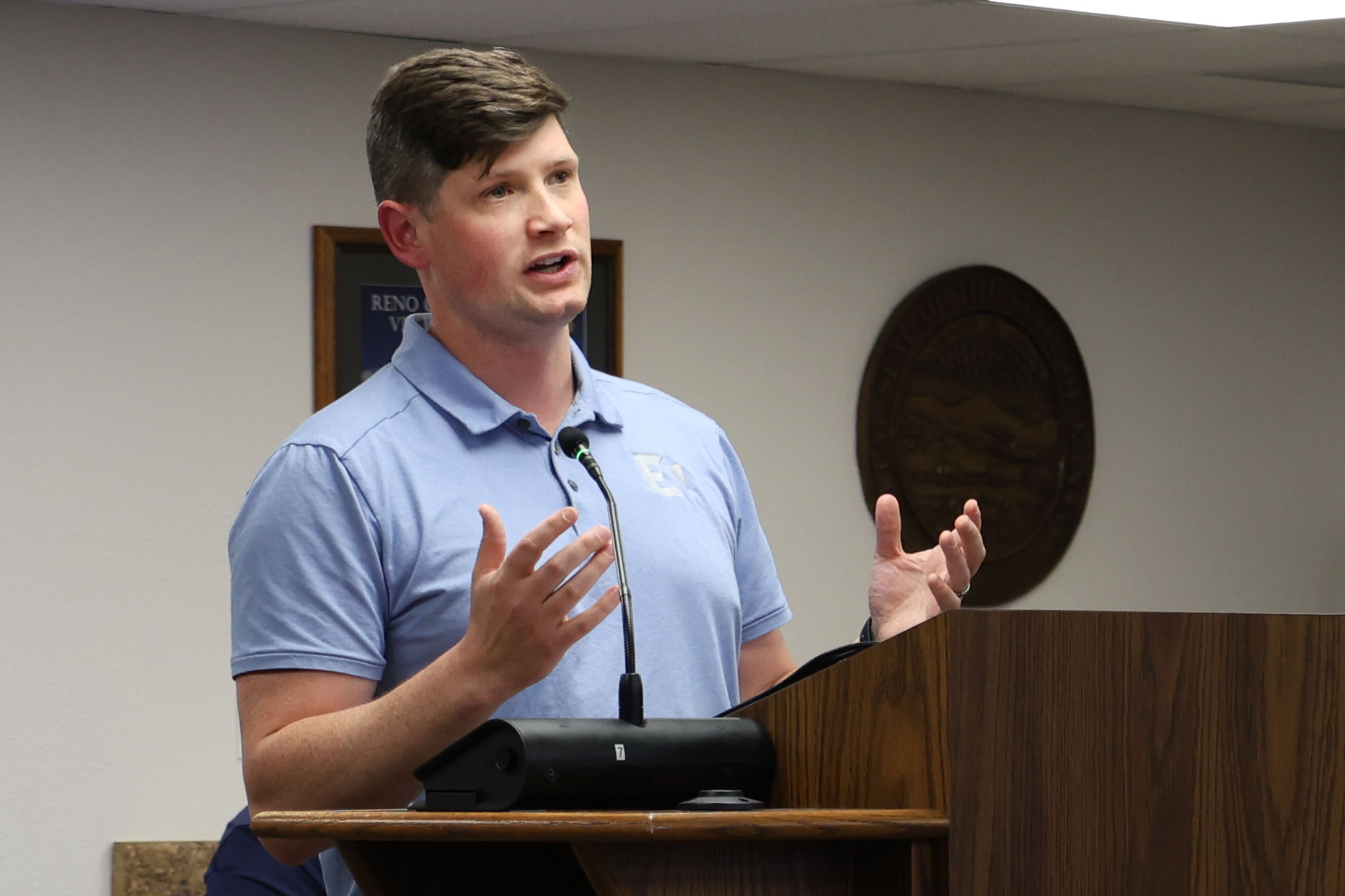 Andrew Goering, with Engineering Consultants, answered questions about water usage at Salt Lick.
Water Usage and Sustainability Questions
Water availability was one of the most heavily discussed topics during the session, reflecting concerns commissioners said they had heard from residents.
Consultants appearing on the Teams screen explained:
- Existing water rights total approximately 568 acre-feet annually
- Average projected usage remains below available water rights
- Four wells are already located on-site
- Treated wastewater would be reused for irrigation
- Cedar tree removal reduces overall water consumption
Engineers also described plans for a non-discharging lagoon system that would recycle treated water back into irrigation operations.
Commissioners said the additional information helped address many of the concerns they had received from the public.
The project team stressed that water sustainability had been carefully analyzed before development plans moved forward.
Countywide Transient Guest Tax Proposal
Partington also outlined a proposal for a potential countywide transient guest tax outside Hutchinson and South Hutchinson city limits.
The proposal would require a charter resolution allowing the county to exceed the current 2% statutory limit.
Potential Tax Uses
- Tourism promotion
- Visitor marketing
- Support for countywide attractions and events
- Potential financing support for Salt Lick
Officials explained that lodging taxes are already common throughout Kansas and would primarily affect visitors rather than local residents.
Lodging Types Potentially Included
- Hotels
- Airbnbs
- Bed-and-breakfasts
- Rural lodging facilities
Commissioners discussed how tourism promotion funds generated by the tax could help market attractions throughout Reno County.
“We can actually give them more promotion with the money we’re collecting.” — Randy Partington
Several commissioners also acknowledged that surrounding communities already use similar lodging taxes successfully.
County Employee Recruitment and Retention Challenges
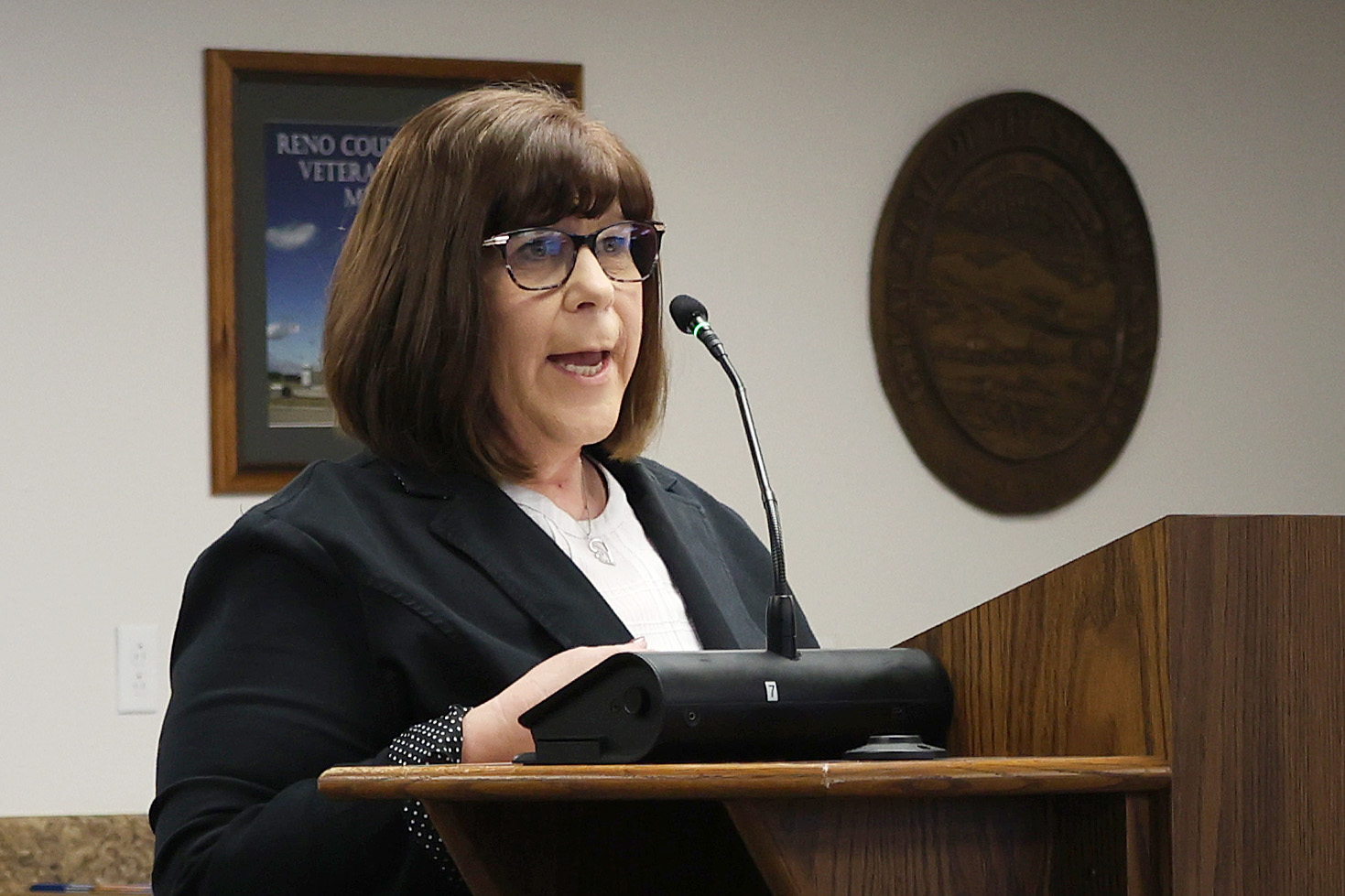 Reno County Human Resources Director Helen Foster
The second half of the study session shifted toward Reno County workforce concerns.
Human Resources Director Helen Foster presented proposed compensation adjustments aimed at helping departments recruit and retain employees in difficult-to-fill positions.
Foster explained that the county continues losing applicants to private-sector employers offering higher wages.
“We may find a person, and we think we’ve got them, and then as soon as the pay is offered, they’re out.” — Helen Foster
Proposed Compensation Adjustments
The proposal would create specialized pay multipliers for positions facing significant hiring challenges.
Positions Identified
- CDL drivers
- Equipment operators
- Mechanics
- Juvenile corrections staff
- Custodial staff
- Bus drivers
- Attorneys
Foster also explained that the county reviewed employees’ previous work experience to better place current staff within the compensation scale.
Estimated Cost
- Approximately $294,000 for the remainder of 2026
County officials said budget efficiencies and current vacancies would help offset the cost this year.
Commissioners expressed appreciation for the work staff completed on the proposal and acknowledged the importance of remaining competitive in attracting employees.
“If it’s not addressed, we’re not getting people to fill our positions, and they’re needed.” — Commissioner Don Bogner
Commissioners also discussed the value of stable public employment and long-term benefits while recognizing the challenges of competing with private industry wages.
During the study session the Commissioners repeatedly emphasized:
- The importance of tourism development
- Careful financial planning
- Responsible water management
- Supporting county employees
- Long-term economic growth opportunities for Reno County
Both the transient guest tax proposal and the employee compensation recommendations are expected to return for formal commission consideration during future meetings.
The next Reno County Commission meeting will be at 9 a.m. on May 13th, 2026, in the Veterans Room of the courthouse, 206 W. First Ave.and will include a public hearing.
Public Hearing: Notice is hereby given that the County Commission of Reno County, Kansas, (the "County Commission") will conduct a public hearing to consider the establishment of the Salt Lick STAR Bond Project District on May 13, 2026 at 9:00 a.m., or as soon thereafter as possible in the Veteran's Room at the Reno County Courthouse, 206 W 1st Avenue, Hutchinson, KS 67501.