View All
Pretty Prairie Town Hall Breaks Down Property Valuations, Taxes, and Appeals

Town Hall Summary in Pretty Prairie
The meeting opened with a request to keep discussion respectful and focused on understanding how Kansas’ property valuation and property tax system works. Residents were asked to hold questions until the end and use the packet to follow along (the first two pages were an open letter for attendees to read on their own).
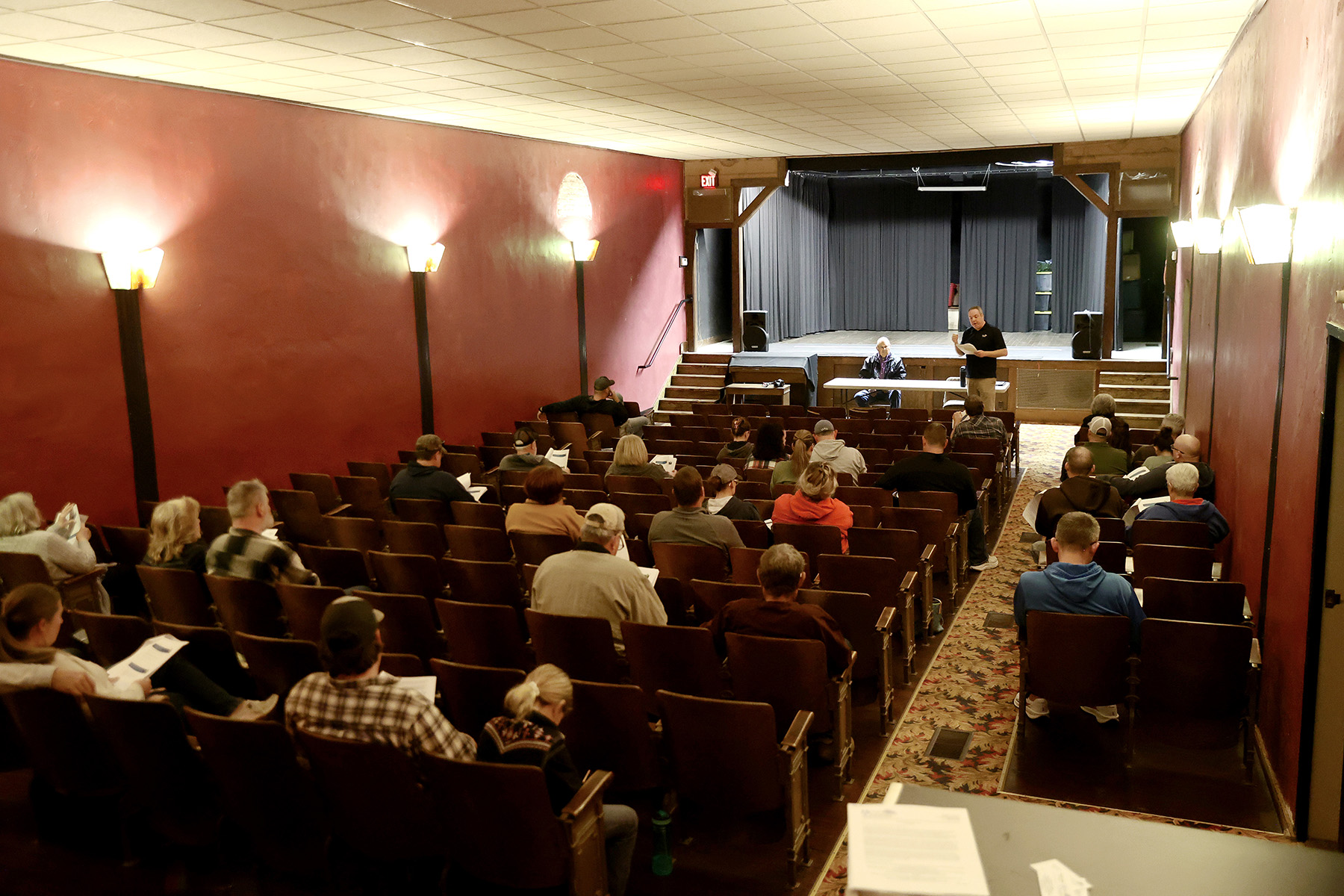 Reno County Appraiser Michael Plank speaks to nearly 40 people Monday evening, Feb. 16, 2026, at the Blue Shoes Theatre in Pretty Prairie during a Town Hall meeting.
 Reno County Appraiser Michael Plank, left, and Reno County Commission Chair Ron Hirst answer questions from the audience Monday evening, Feb. 16, 2026, during a Town Hall in Pretty Prairie.
Key points from Appraiser Michael Plank’s presentation
1) The county appraiser’s role is driven by Kansas law
Plank emphasized that everything his office does is statute driven. The appraiser’s job is to discover, list, and value real and tangible property in the county and to do so fairly and uniformly under state law. He noted county appraisers follow USPAP (Uniform Standards of Professional Appraisal Practice)—especially standards related to mass appraisal.
2) Mass appraisal and how values are determined
Reno County uses CAMA (Computer Assisted Mass Appraisal) to value parcels consistently at scale. Plank stressed that “uniform and equitable” means using consistent methodology, not ensuring every parcel rises the same amount.
He reviewed the three accepted appraisal approaches:
Sales comparison (primarily residential): Reno County typically uses five sales to model value, adjusting for differences.
Income approach (primarily commercial, when sufficient income data exists): based on anticipated future benefits.
Cost approach (new construction/special-use/limited data): replacement cost less depreciation, with a reminder that cost does not always equal market value (e.g., a pool).
Valuation date: Kansas market value is reported as of January 1 each year.
3) Values vs. taxes: the appraiser is not the “tax man”
Plank walked through a budget/valuation example to show that higher values do not automatically mean higher taxes if budgets and mill levies don’t increase. He emphasized that the appraiser reports market value; taxing entities (city/county/schools, etc.) set budgets and mill levies.
He referenced the Revenue Neutral Rate (RNR) notices that began arriving in summer 2023, which helped highlight how levies and budgets relate to tax bills.
4) What the appraiser “does not do”
Plank said the office cannot legally value property using:
CPI or broad inflation measures applied across the board
simple “price per square foot” averages for unsold homes
Zillow/Realtor estimates as appraisals
speculation about future events (e.g., a new development “will lower my value”)
Instead, the office must rely on validated market data in the county and consistent methods.
5) Appeals: what can be appealed and how to be effective
Plank stressed that property owners may appeal valuation or classification—not taxes. He explained the office relies on both:
Objective data (measurable: square footage, baths, bedrooms)
Subjective factors (location/desirability/updates/obsolescence)
He advised residents to check their property record card for errors and bring facts if appealing. His “pro tip” for state-level hearings: once the argument becomes primarily about “taxes” rather than valuation/classification, the case usually weakens.
He reviewed the annual cycle:
Values set as of Jan 1
Notices mailed around March
Appeals in spring
County certifies values in June
Budgets/mill levies set afterward
Treasurer mails statements in November (taxes paid in arrears)
Residents can appeal:
In March (informal appeal window), or
Later as a “payment under protest” (but not both in the same tax year).
6) Local and countywide market context and compliance
Plank shared several statistics to explain why values have increased and why Pretty Prairie saw catch-up adjustments:
Countywide, average sale prices increased ~44% from 2020–2024.
Validated sales often sell above appraised values (Plank cited ~86% in 2024 and ~84% in 2025), noting appraisal models reflect past sales and can lag the market.
The state monitors counties using sales ratio standards. Plank said Pretty Prairie had been significantly undervalued (ratio in the 60s as recently as 2023), and the office has been working to correct that toward the required range (near ~90% recently). This means some parcels may see larger adjustments to restore equity.
He also explained nuances like F-class (farm class) properties, where sale prices can rise sharply while ag land is not valued at market under Kansas law—creating valuation limitations.
Plank highlighted that Reno County has received substantial compliance ratings from the Kansas Department of Revenue for many years and noted a recent year achieved a perfect compliance score.
7) Mill levy context and where taxes go
Plank explained that while the county treasurer collects property taxes, the funds are distributed among many entities. He cited a countywide average breakdown (county, city, schools, community college, fire, library, state, etc.) and emphasized the split differs by location.
He also compared:
The county-only mill levy (stated as 35 mills in 2024) as relatively low statewide, and
The total average levy countywide (stated as ~151 mills) as roughly midrange in Kansas.
He acknowledged Pretty Prairie’s total mill levy is much higher than many areas, and contrasted it with nearby rural levy totals.
8) Appraiser field inspections and exemptions
Plank addressed concerns about staff entering property:
Staff may inspect externally under Kansas law and are trained for safety.
Staff will not enter homes without permission, except for limited new construction situations before occupancy.
If someone asks staff to leave, the office will honor it.
Advance notice for routine inspections isn’t practical due to workload and logistics.
On exemptions, he explained most tax exemptions must be approved by the state (Topeka) through an application submitted via the county appraiser’s office.
9) Recent legislative changes discussed
Plank referenced a personal property exemption passed last year (for many trailers/boats/ATVs/UTVs, etc.), noting that exempting one category shifts the burden elsewhere. He also mentioned a change related to the state school levy (USD 311 general) expected to provide some relief.
He provided a tax impact rule-of-thumb example for Pretty Prairie:
Roughly $270 in taxes per $10,000 of increased appraised value in-town (based on stated levy assumptions), and about $180 per $10,000 in rural areas (also assumption-based).
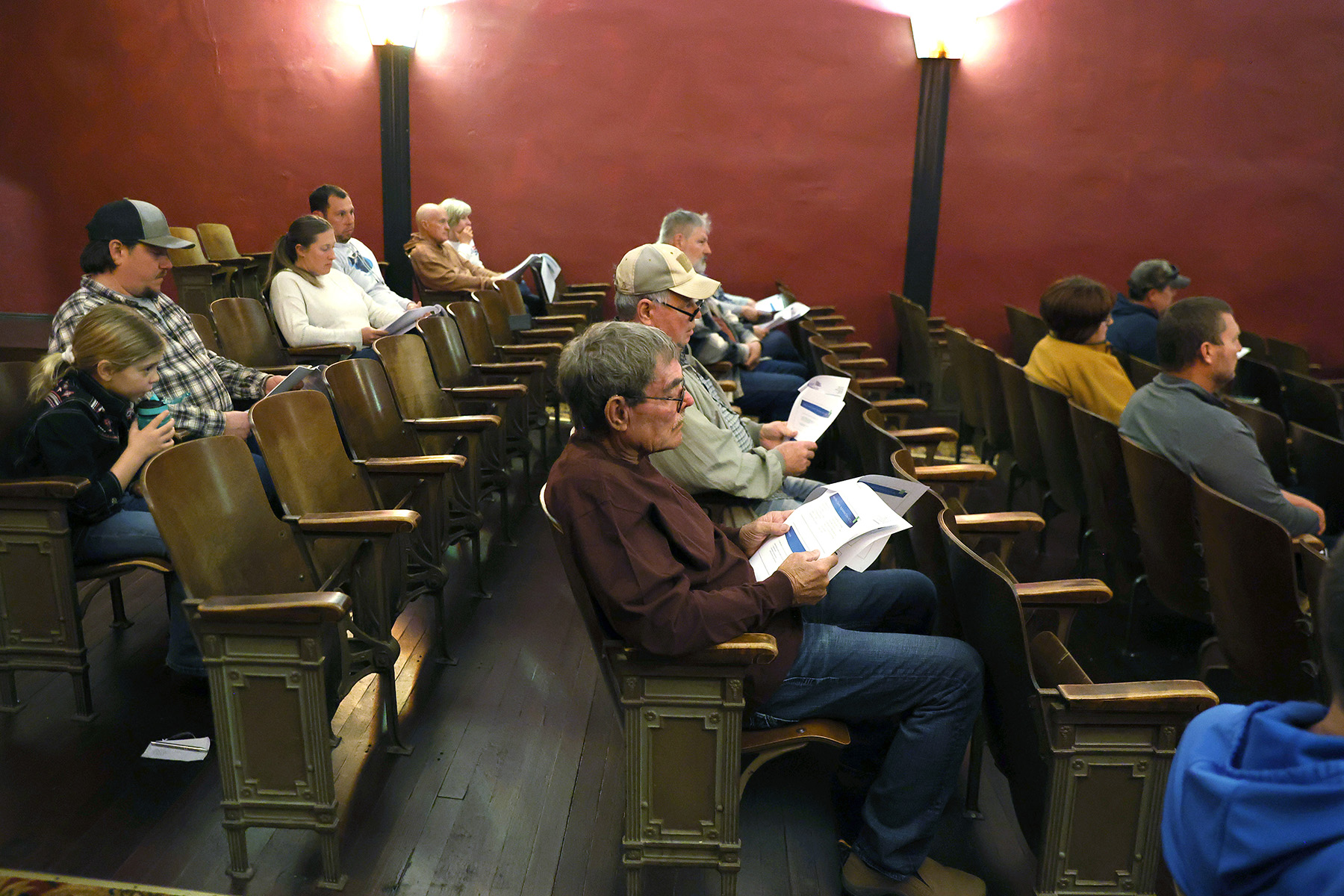

Q&A themes from the audience
How are comparables chosen, and how far can they be?
Plank explained comps are auto-generated by the mass appraisal system, then reviewed and adjustable. Reno County comps must come from sales within Reno County; however, market areas can be broad, so comps may come from farther away when local sales are limited. He noted:
The comp sheet shows five comps, but the highest and lowest adjusted sales prices are excluded from the market value calculation.
Location is accounted for through location/market adjustments, and staff can remove poor comps.
Access to property cards and comp sheets
Residents were reminded they can request their property record card and comparison sales sheet anytime. Sales detail sharing has legal constraints, but broader information can be provided when someone indicates they are considering an appeal.
Concerns about fairness, volatility, and uneven increases
Several residents questioned why some properties rose more than the county “average,” expressing frustration that long-held properties sometimes appear to “catch up” abruptly after a sale. Plank emphasized the system relies on market evidence and a rolling sales history, and encouraged focusing on three-year change rather than only year-over-year shifts.
Listings vs. values
A resident asked if a high listing price could trigger a big value increase. Plank clarified the office doesn’t use listing prices as valuations, but listings may prompt staff to verify property data (updates, features, accuracy). A sale price, if validated, is the strongest indicator of market value.
Classification questions (commercial buildings used for storage)
A resident raised concern about Main Street buildings being assessed more like residential storage because of use, and how that impacts the community. Plank explained classification is use-based under statute, even if the building sits in a commercial district.
Where tax dollars go
A resident asked whether exact dollar breakdowns are publicly available. Plank directed them to county/city administration, noting his office focuses on valuation/classification rather than spending allocations.

Comments from Commission Chair Ron Hirst
Chair Hirst responded to questions and added broader context about:
State statutes limiting county authority (counties lack the same “home rule” flexibility cities have).
The history of state actions affecting local finances (including discussion of state-controlled allocations/returns).
Concern about recent legislation timelines impacting the practicality of local budgeting.
Encouraging residents to engage locally (city councils, boards, budgeting conversations), and emphasizing that growth of the tax base is preferable to continual strain on existing taxpayers.
He also affirmed that the appraiser’s office does not take direction from elected bodies to “raise values,” noting oversight and compliance monitoring by the state.
Closing message
Plank encouraged residents to contact the appraiser’s office directly with questions, request their records, and appeal if they believe the market value or classification is wrong—grounding appeals in accurate data and realistic market evidence (the core question: “Could you sell it for the appraised value?”). The meeting concluded with thanks to attendees and appreciation for the discussion.