View All
Reno County Takes First Step Toward Reviving Emergency Planning Committee
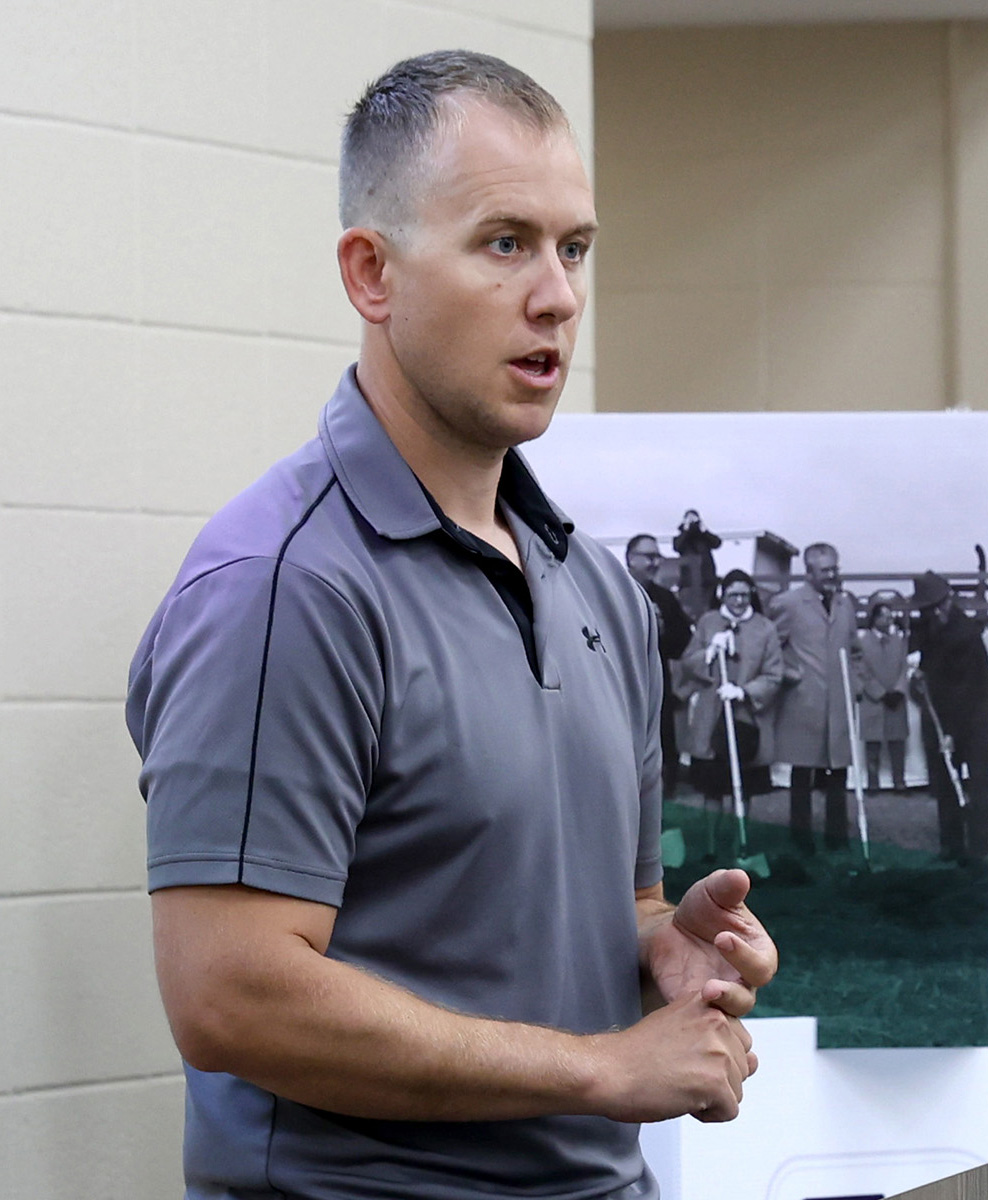
 Adam Weishaar, Director of Reno County Emergency Management, talks to the attendees at the Local Emergency Planning Committee Tuesday morning.
 Chad Steele, from Hutchinson Community College, left, and Megan Gottschalk Hammersmith, Assistant Director - Community Health Operations at Reno County Health Department.
On the morning of June 24, 2025, a diverse group of local leaders and stakeholders gathered at the Pavilion of Hutchinson Regional Medical Center. They weren’t meeting in response to a crisis, but rather to prepare for the ones that might come — and to ask a vital question: Should the Reno County Local Emergency Planning Committee (LEPC) be brought back to life?
Julie Kallas, Emergency Preparedness Coordinator for Reno County, opened the meeting with a welcome and a reminder of why everyone was there. The LEPC, once a vibrant group with over 200 participants, had become inactive in recent years. Participation had dwindled — a trend that accelerated during the COVID-19 pandemic — and the committee eventually stopped meeting. But the need for coordination, communication, and relationship-building around emergency planning had never really gone away.
Julie asked each attendee to introduce themselves, emphasizing the value of putting names to faces before disasters occur, not after. She then turned the floor over to Adam Weishaar, Director of Reno County Emergency Management, who offered a brief history of the LEPC. He spoke about its original mission: to bring together representatives from public health, emergency services, industry, long-term care, and volunteer organizations to prepare for emergencies and disasters. More than a regulatory function, the LEPC had been a place for connection — a hub where people from different sectors could work as one community.
After Adam’s overview, Reno County Health Department Epidemiologist Megan Pierce provided a public health update on several emerging issues. She reported that the state of Kansas has 80 confirmed measles cases, the second-highest in the U.S., with one identified case in Reno County. Pierce noted challenges with contact tracing in public spaces and the potential for further spread due to summer travel. She also highlighted that only 85% of kindergartners in Reno County are fully vaccinated against key diseases, including MMR, polio, and hepatitis, below the 95% level typically recommended for community protection. Other updates included ongoing monitoring of a new COVID-19 variant seen in parts of Asia, recent local detections of bird flu in animals (though no recent human cases), and reminders about West Nile virus risk during the summer season.
Megan Gottschalk Hammersmith, Assistant Director - Community Health Operations at Reno County Health Department, invited the group to share their thoughts: Was there still a need for an LEPC? Would people participate if it returned? The answers were thoughtful and encouraging.
Representatives from the Health Department stepped forward with a practical offer — to help coordinate meetings and agendas if the group wanted to move forward. They even suggested that the committee might consider restarting in a more focused form, such as an ESF-8 group (Emergency Support Function #8), which concentrates specifically on public health and medical services.
First responders, long-term care providers, and community institutions emphasized their own needs. Some had regulatory obligations to participate in community preparedness efforts. Others were seeking clarity on their roles in emergency response. All saw the benefit of restoring a group that helped define responsibilities and foster collaboration. But they were clear: meetings needed to be meaningful — not just something to check off a list, but sessions that produced real value and actionable outcomes.
The conversation also expanded into upcoming preparedness efforts. Participants discussed active shooter training, which the hospital has scheduled for late July, tornado safety issues in smaller towns, and hospital disaster drills. The lack of public shelter information was a common concern, and there was growing interest in grant opportunities to improve infrastructure and public safety.
As the meeting drew to a close, the group agreed on some practical next steps:
- Start with an ESF-8-style group that could meet quarterly or twice a year.
- Use the Health Department as an interim coordinator to manage agendas, recruit members, and plan exercises.
- Prioritize actionable topics and outreach to underrepresented stakeholders like elected officials and the media.
The next LEPC meeting will be held in October although the exact date has not been set yet. For those who would like to know more, contact Julie Kallas at [email protected]
 Reno County Health Department Epidemiologist Megan Pierce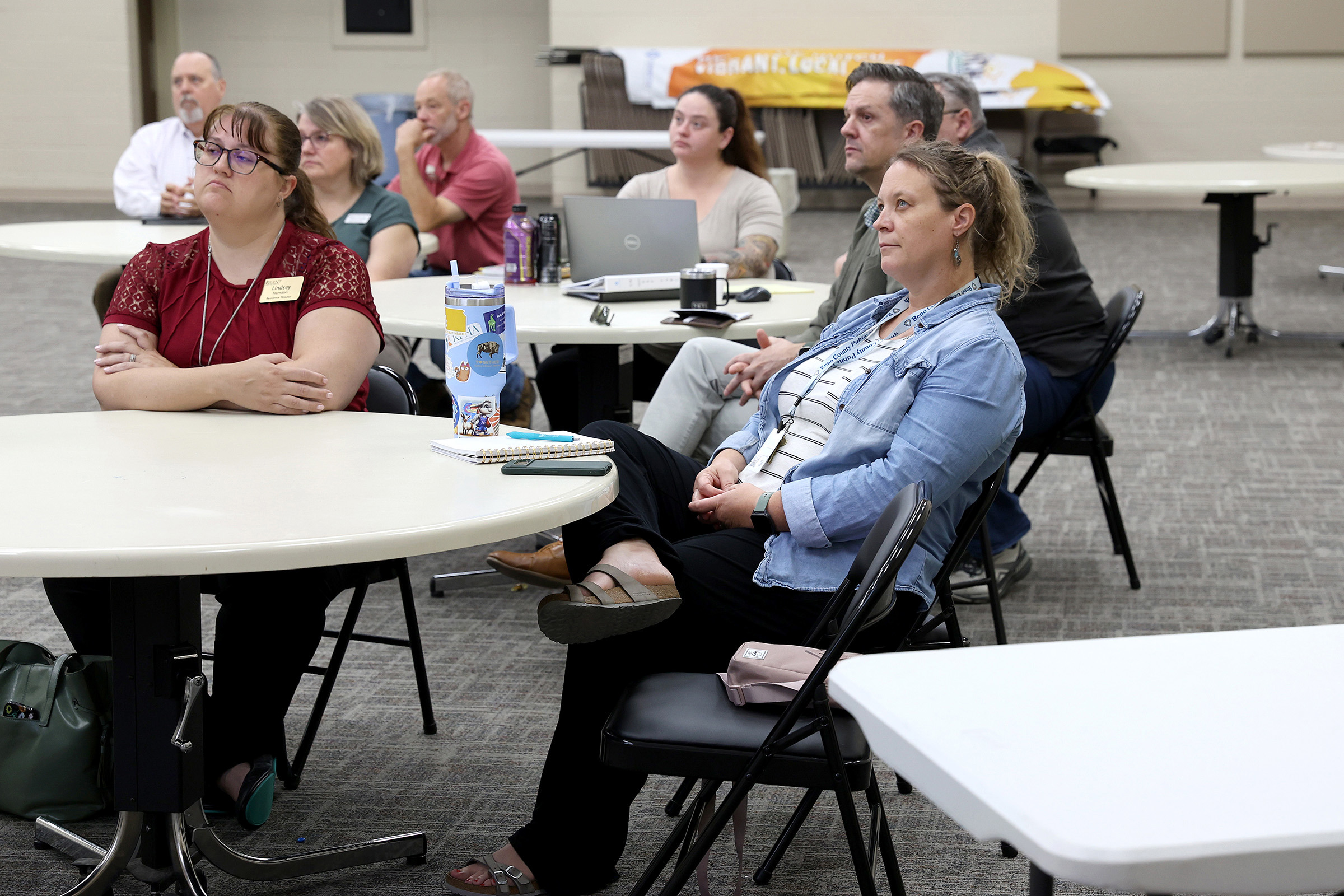
 Adam Weishaar, Director of Reno County Emergency Management
 Kandace Bonnesen, Director of Rcat and Department of Aging
 Dan Kauffman, Dir. of Envinonmental Services, Mennonite Friendship Communities
 Ashlea Hand, Plevna