View All
Not Just End-of-Life Care: What Hospice Really Provides

Community Collaboration Series: Understanding Hospice Care
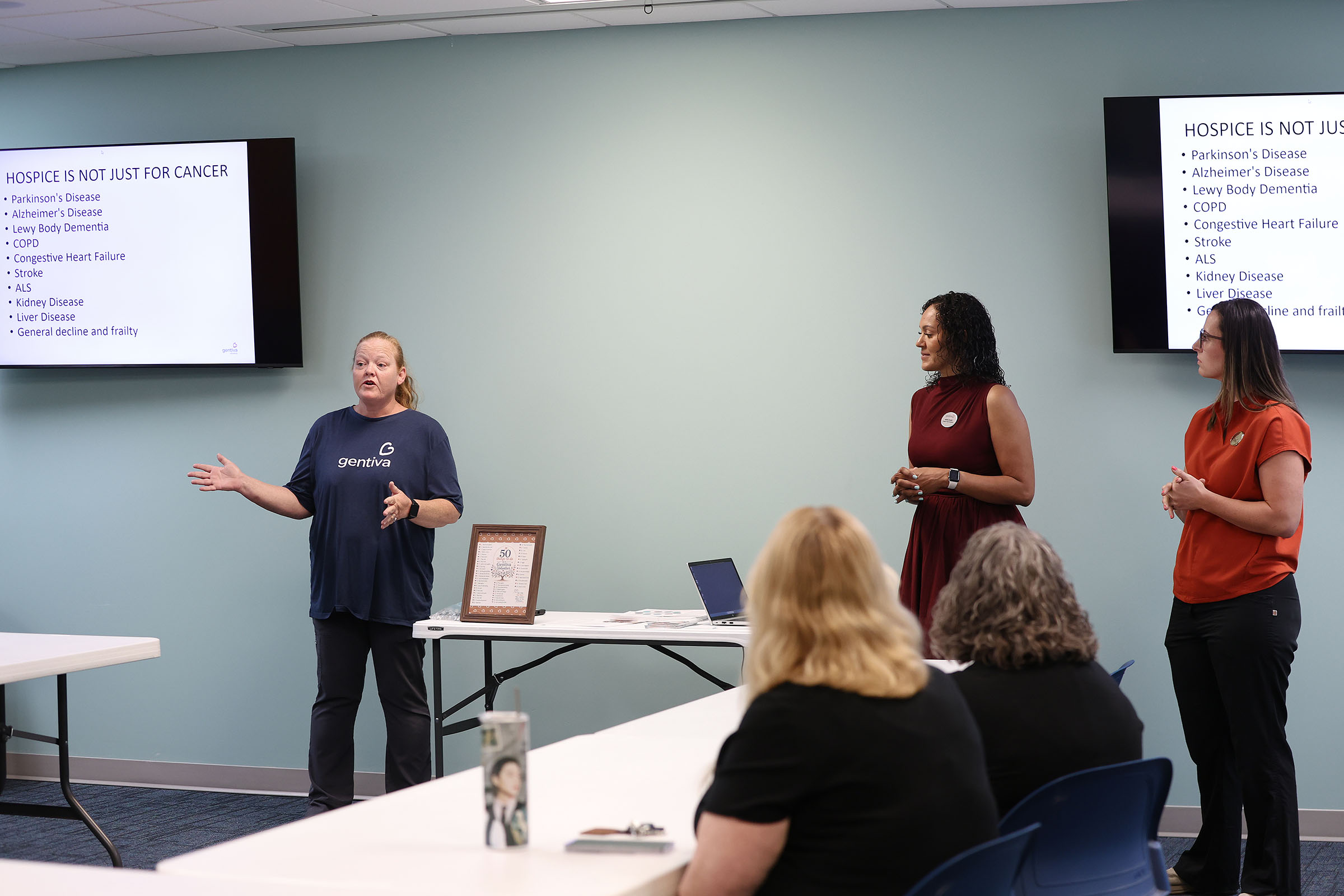
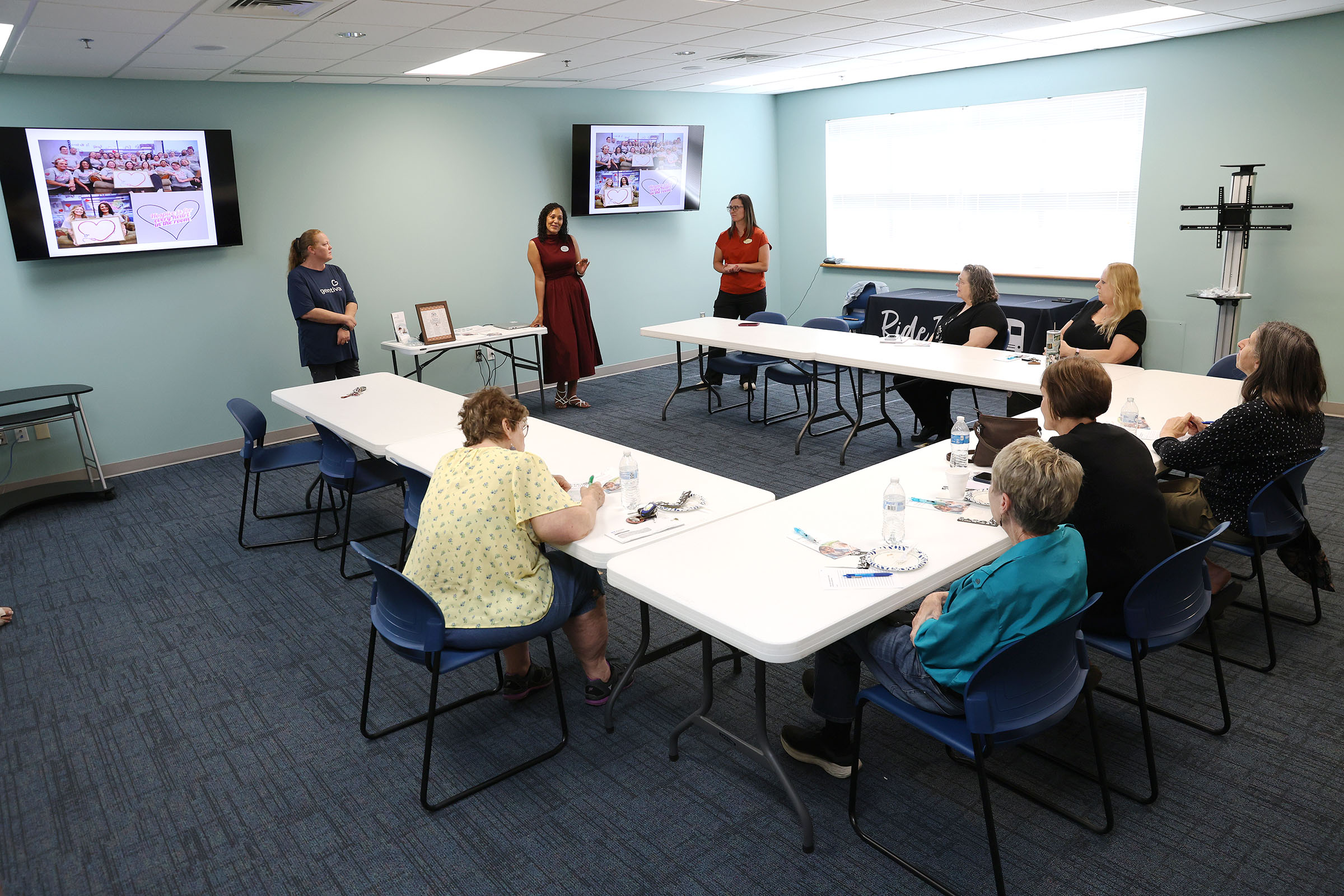 Gentiva representatives who spoke at the Community Collaboration Series were Dannielle Stiffler, Volunteer Coordinator, left, Alisha Smith, Hospice Care Consultant/PTA, and Shea Meyer, RN Clinical Liaison.
The Reno County Community Collaboration Series recently welcomed representatives from Gentiva Hospice for a conversation focused on understanding hospice care, clearing up common myths, and helping families recognize when additional support may be available.
The presentation was led by Gentiva team members Alisha Smith, Hospice Care Consultant/PTA, Dannielle Stiffler, Volunteer Coordinator, and Shea Meyer, RN Clinical Liaison. Together, they shared that hospice care has changed significantly over the years and is no longer only thought of as care provided in the final days of life.
A key message from the presentation was that hospice is about quality of life, comfort, support, and helping people live as fully as possible for whatever time remains.
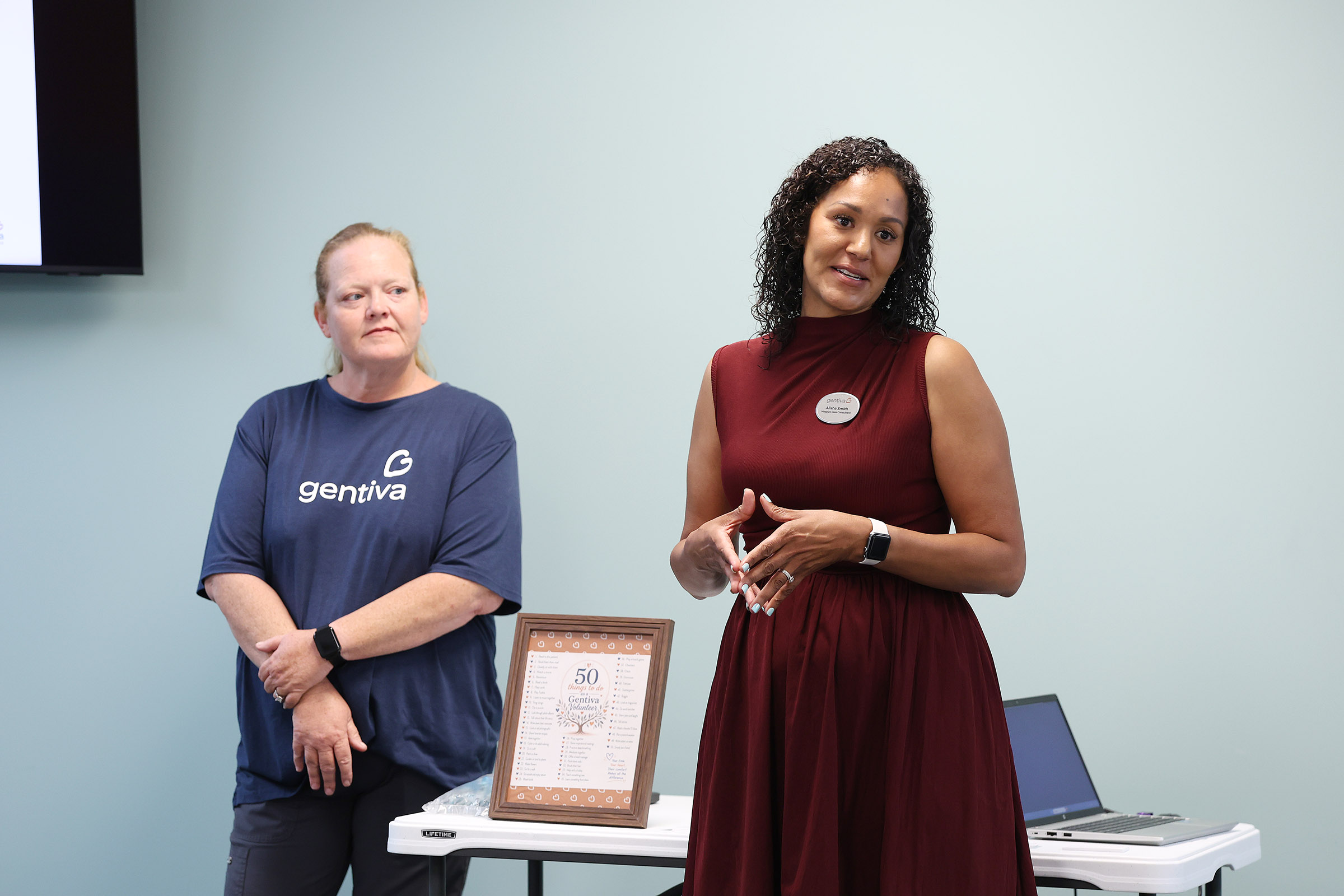
The presenters explained that while hospice was once commonly associated only with the very end of life, today’s hospice care provides support for patients, families, caregivers, facilities, and physicians.
Hospice care is specialized care designed to provide comfort and support to individuals with life-limiting illnesses. Services may include:
- Pain and symptom management
- Support for emotional needs
- Support for spiritual needs
- Caregiver support
- Assistance with honoring patient wishes
- Education for families and caregivers
- Help reducing unnecessary hospitalizations
- Additional support in the home or long-term care setting
- One of the main points emphasized was that hospice is not about “giving up.” Instead, it can bring more help into the home and provide an added layer of support for both the patient and their loved ones.
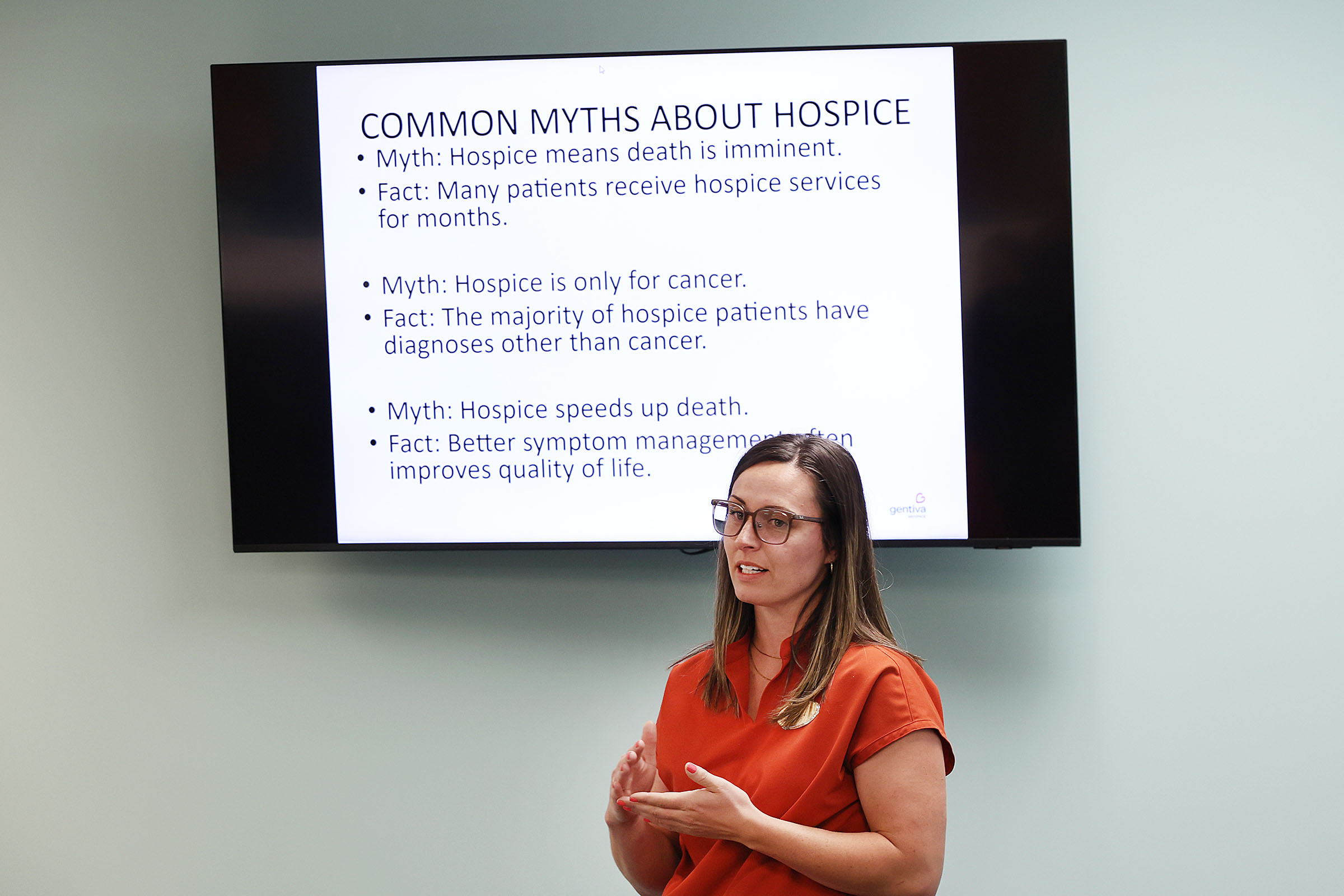
Common myths about hospice
The presentation addressed several common misunderstandings about hospice care.
Myth: Hospice means death is imminent.
The presenters explained that many patients receive hospice services for months, and some may receive services for much longer. Patients are reevaluated regularly to determine whether they continue to qualify.
Myth: Hospice is only for cancer patients.
Hospice care is available for many diagnoses, not just cancer. The presenters said many hospice patients have other conditions.
Myth: Hospice speeds up death.
The presenters explained that hospice focuses on comfort and symptom management. In some cases, better symptom control and support may help patients avoid repeated crises or hospital visits.
Myth: People on hospice cannot leave the house.
The presenters made it clear that hospice patients can still go places and do things they enjoy.
Myth: Hospice stops feeding people or takes away care.
The presenters strongly addressed this misconception, explaining that hospice does not mean patients are denied food or care. They said if a patient wants something meaningful or comforting, the hospice team wants to support that whenever possible.
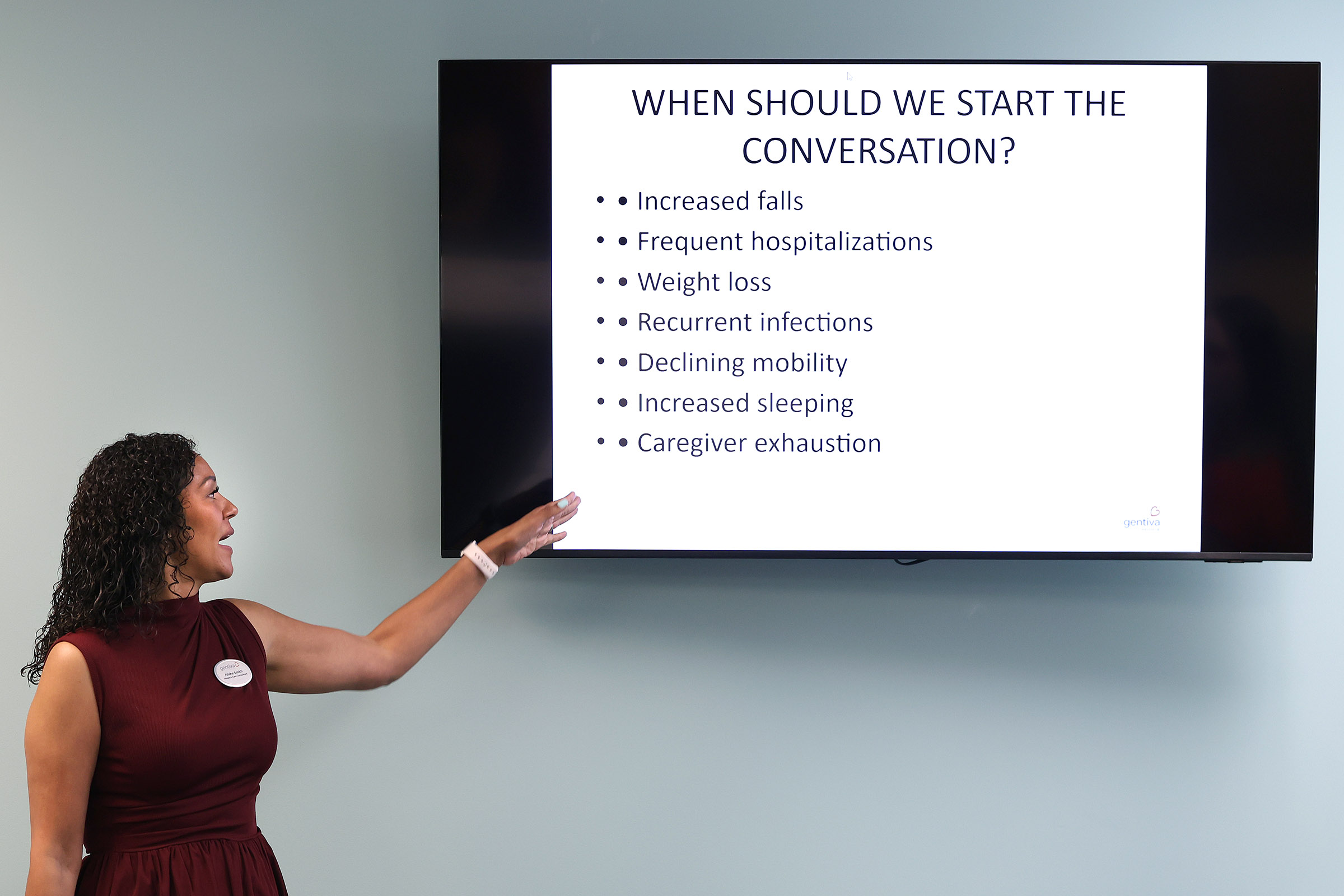
Who may qualify for hospice?
A patient may qualify for hospice when a physician determines that, if the disease follows its natural course, the patient may have a life expectancy of six months or less. The presenters stressed that this does not mean the person will pass away within two weeks or even within six months. It means the person may qualify for additional support.
Conditions discussed during the presentation included:
- Parkinson’s disease
- Alzheimer’s disease
- Lewy body dementia
- COPD
- Congestive heart failure
- Stroke
- ALS
- Kidney disease
- Liver disease
- General decline
- The presenters also explained that hospice eligibility is not based only on a diagnosis. Changes in a person’s daily life may also be signs that additional support is needed.
Examples included:
- Increased falls
- Frequent hospitalizations
- Weight loss
- Recurrent infections
- Increased sleeping
- Decline in walking or needing a walker or wheelchair
- Increased oxygen needs
- Shortness of breath
- Fatigue
- Needing help with bathing, dressing, cooking, eating, or other activities of daily living
- A caregiver feeling exhausted or unable to continue alone
- The presenters encouraged families not to wait until they are completely worn out before asking questions about hospice support.
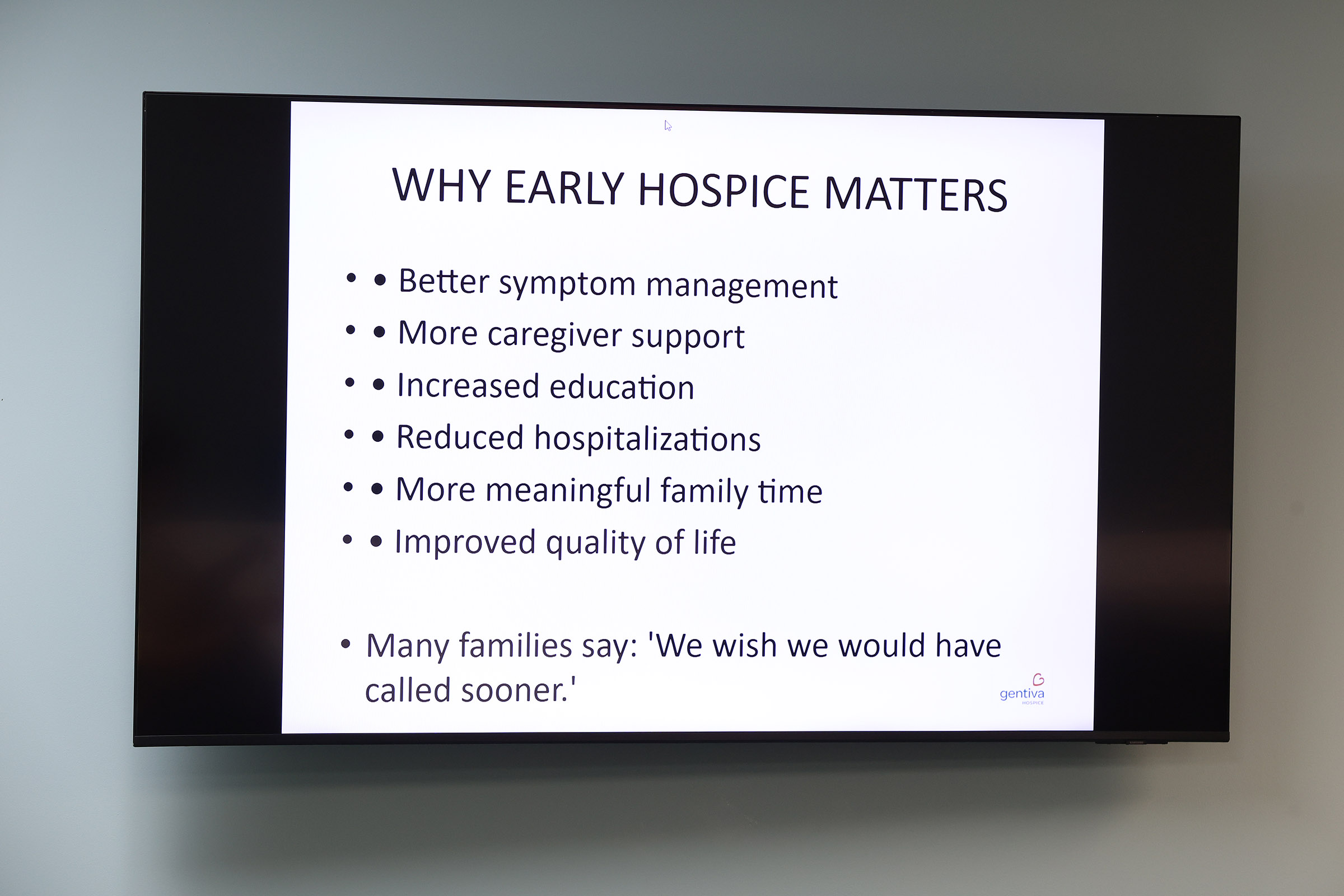
Why early conversations matter
Gentiva’s team emphasized that earlier conversations about hospice can help families better understand their options and receive support sooner.
Benefits of earlier hospice involvement may include:
- Better symptom management
- More caregiver support
- Increased education
- Reduced hospitalizations
- More family time
- Improved quality of life
- The presenters shared that many families say they wish they had known sooner that hospice services were available.
 Dannielle Stiffler, Volunteer Coordinator, created a list of 50 things to do as a Gentiva Volunteer.
The hospice care team
The presentation also explained the interdisciplinary team involved in hospice care. The team may include:
Nurse case manager
Hospice nurses typically visit at least twice a week, unless the patient prefers otherwise. Visits may increase as needs change, even up to daily visits. Nurses complete assessments, check vital signs, monitor symptoms, look for changes, and help coordinate care.
Hospice aide
Hospice aides help with bathing, grooming, dressing, hair, nails, light housekeeping, making the bed, and other daily care needs.
Social worker
Social workers may assist with advance directives, DNR paperwork, facility placement, caregiver needs, respite care coordination, and other resources.
Chaplain
Chaplains provide spiritual support, but the presenters explained that support can also include companionship, music, conversation, cards, coffee, or simply another trusted person to connect with.
Medical director
A physician oversees hospice care and helps guide symptom management and care recommendations. Patients may also be able to keep their primary care physician involved if that physician is willing to follow them.
Bereavement team
After a patient passes, the bereavement team follows up with families and helps connect them with additional support if needed.
Volunteers
Hospice volunteers may provide companionship by reading mail, playing cards, doing crafts, playing games, watching movies, visiting in facilities, sitting vigil, or helping in the office. Danielle shared that hospice volunteering is flexible and can be shaped around the volunteer’s comfort level, schedule, and interests.

Support for the whole family
A major theme of the discussion was that hospice supports more than the patient. It also supports family members, caregivers, and loved ones.
The presenters described hospice as an “extra layer” of help. Families can call with questions, concerns, symptoms, or changes. Gentiva shared that its team has nurse support available 24 hours a day, seven days a week.
They also discussed respite care. When a caregiver needs a break, hospice may help coordinate a temporary facility stay for the patient, often up to five days, while hospice staff continue to provide care. This can help caregivers attend family events, recover from illness or surgery, prepare for major life events, or simply rest.
The presenters explained that hospice-covered services may include medical equipment, certain medications related to the hospice diagnosis, incontinence supplies, respite care, and other supports. They encouraged families to ask questions and understand what is covered.
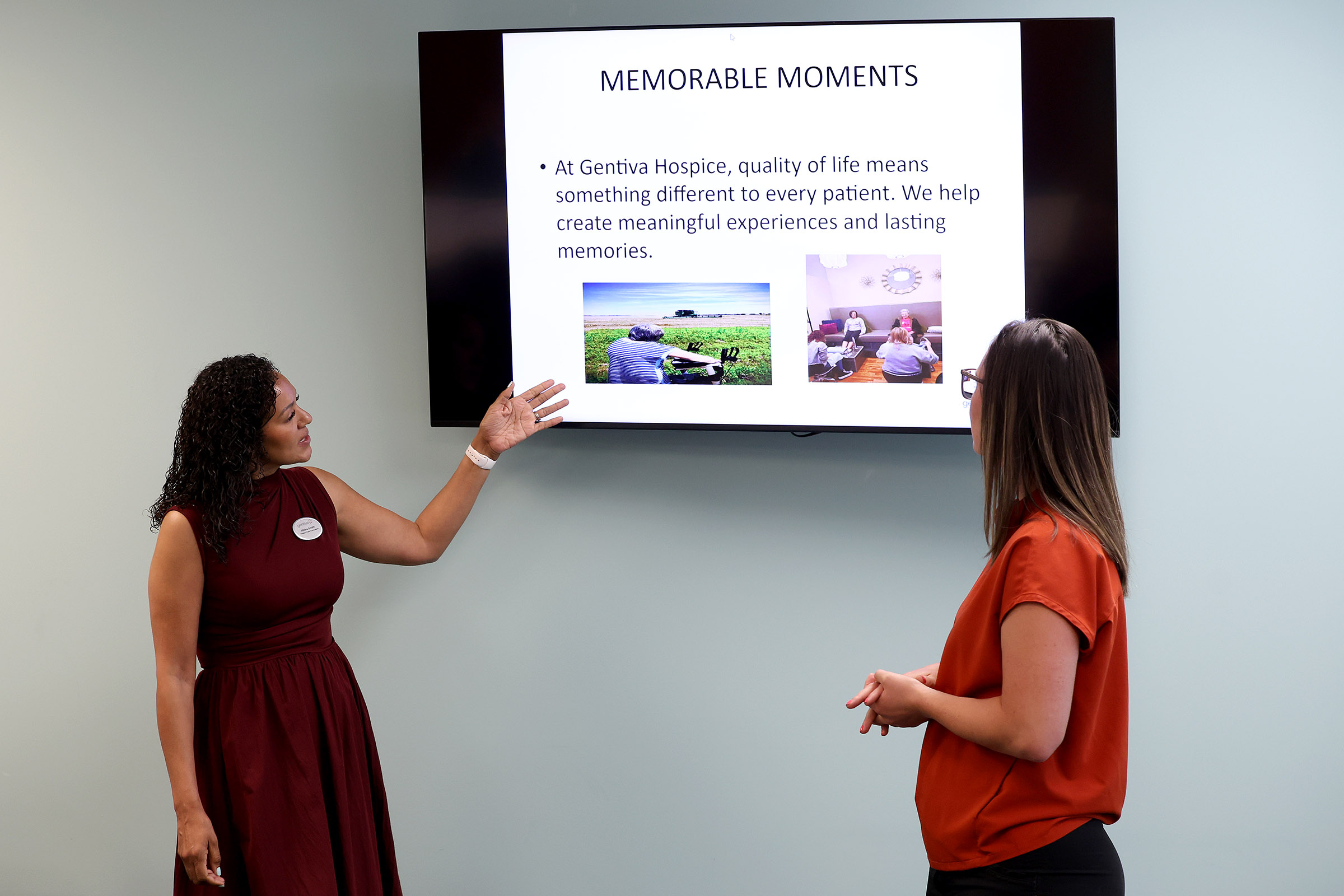
One of the most meaningful parts of the presentation focused on “memorable moments.” Gentiva shared examples of ways hospice teams help patients experience something personally meaningful.
Examples included:
- Taking a farmer’s wife to watch wheat harvest
- Helping a patient get her nails done with a beloved hospice aide
- Taking a 92-year-old former swimming instructor to the YMCA to swim
- Helping couples celebrate anniversary dinners
- Coordinating a meaningful tattoo for a patient in honor of her son who had passed away
- These stories helped show that hospice care is not only clinical care. It can also be deeply personal care focused on comfort, dignity, memories, relationships, and what matters most to the patient.
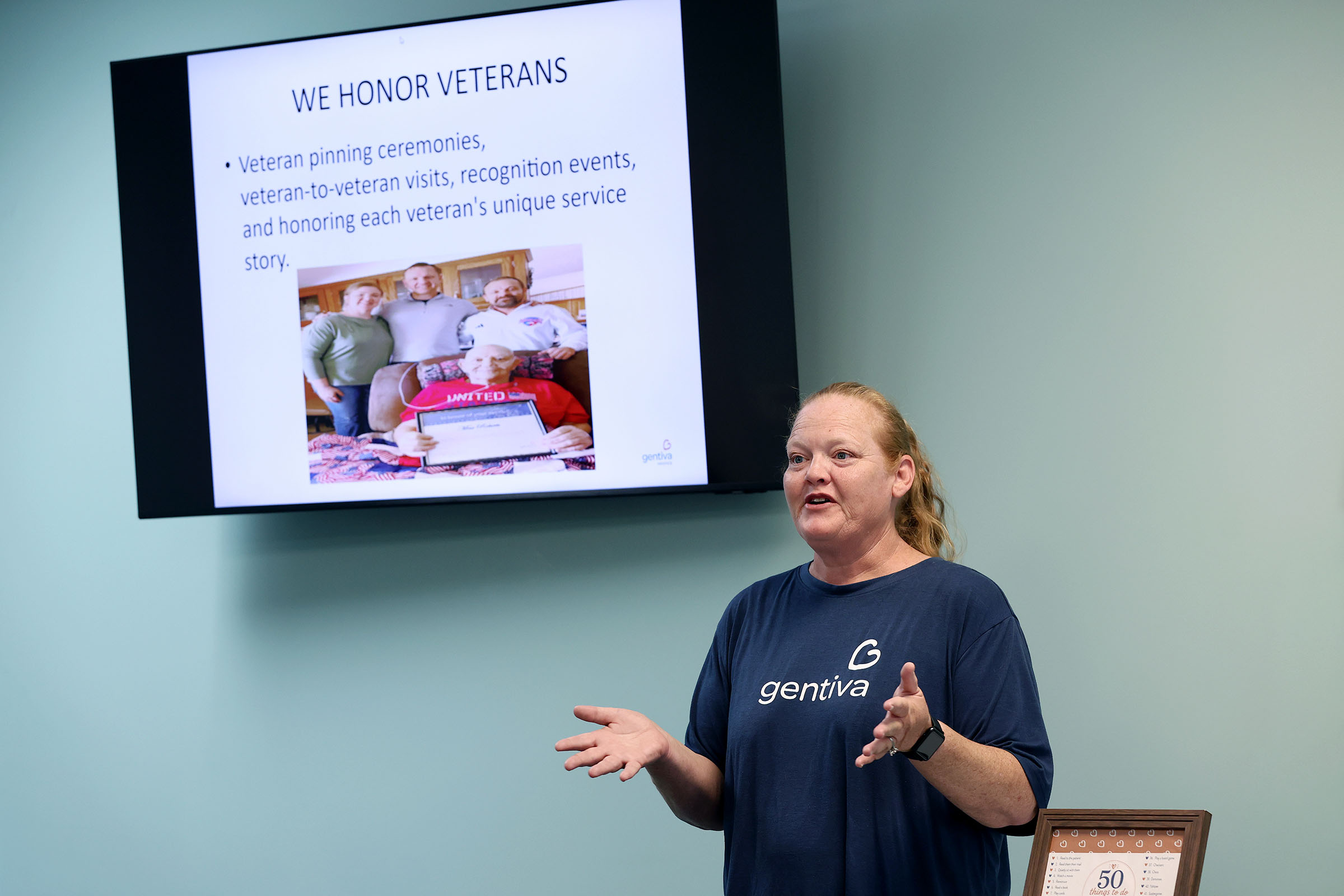
Honoring veterans
Gentiva also discussed its involvement with the We Honor Veterans program. Dannielle shared that Gentiva had reached Level 5, the highest level in Kansas under the previous structure of the program.
The team provides veteran recognition ceremonies, often with another veteran present to help with the pinning ceremony. They also work with local volunteers and groups, including quilters, to help honor veterans. Dannielle shared that veteran-to-veteran connections can be especially meaningful because veterans may share stories with one another that they have never told anyone else.
Local care and community presence
The presenters shared that Gentiva has been local for 23 years and has an office in Hutchinson. They said Gentiva serves Reno County and several surrounding counties, with nurses and volunteers located throughout the region.
The team also discussed the importance of local availability, especially when a family needs help quickly. They explained that as patient needs increase, visits can increase, and when patients are nearing the end of life, nurses may be present more often.
The presentation closed with an invitation for families, caregivers, and community members to ask questions about hospice before they are in crisis. The presenters encouraged people to listen, learn, and explore options, even if they are not ready to sign up for hospice services.
Key takeaways from this series:
- Hospice is about quality of life, comfort, dignity, and support.
- Hospice is not only for the final days or weeks of life.
- Many diagnoses may qualify, including COPD, heart failure, dementia, Parkinson’s disease, ALS, kidney disease, liver disease, stroke, and general decline.
- Families can ask questions before they are in crisis.
- Caregiver exhaustion is a valid reason to seek additional support.
- Hospice supports the patient and the whole family.
- Services may be available in the home, in a facility, or in a long-term care setting.
- Volunteers and chaplains can provide companionship and emotional support.
- Respite care can help caregivers rest or attend important life events.
- Hospice care can include meaningful moments that honor what matters most to the patient.
Our next Community Collaboration Series speaker will be Sara Partlow - Stay Your Way, The Future of Aging at 9:30 am on Thursday, July 16, 2026.