View All
Conservation Leaders Highlight Local Impact at Reno County Legislative Breakfast
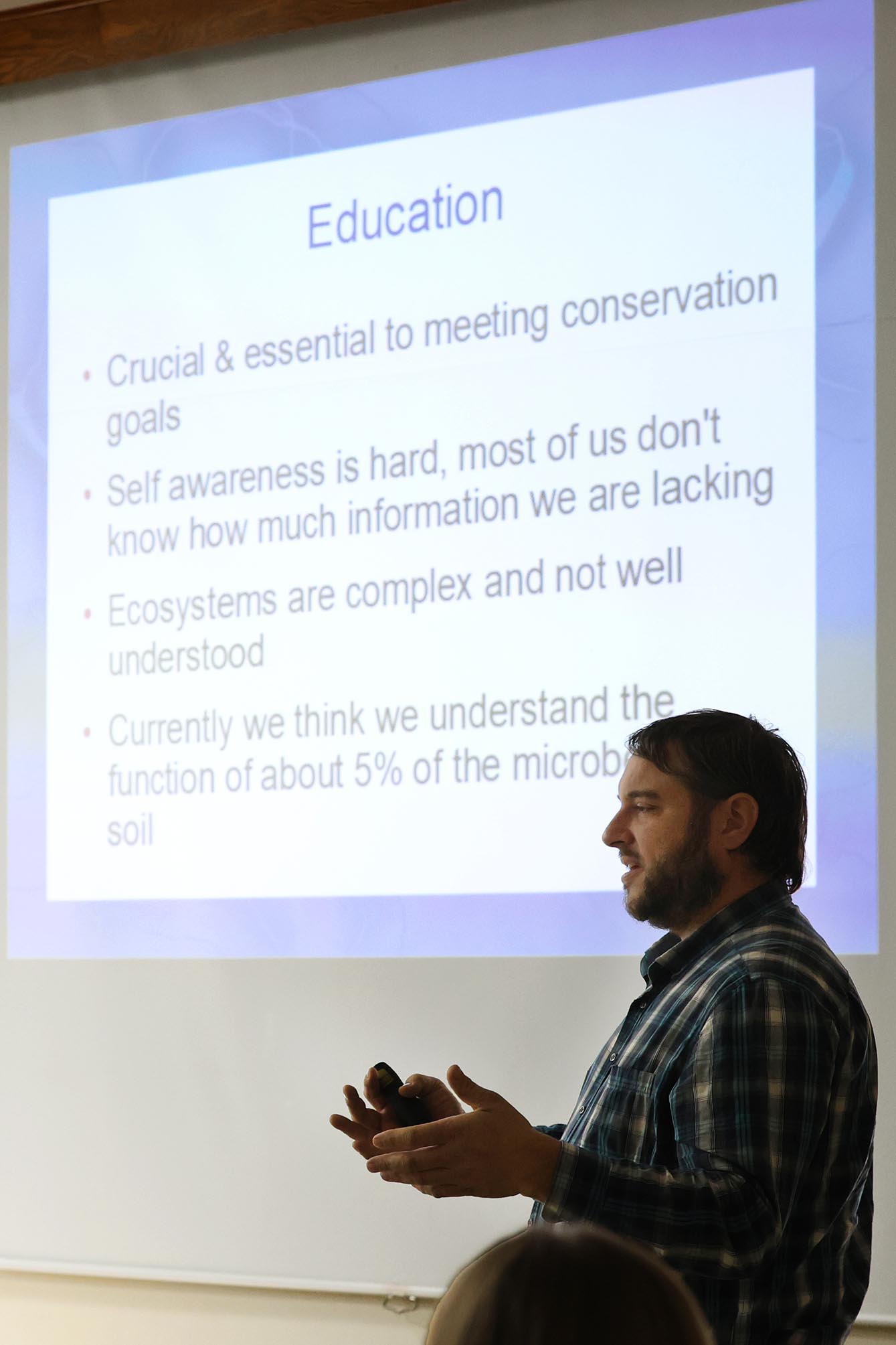
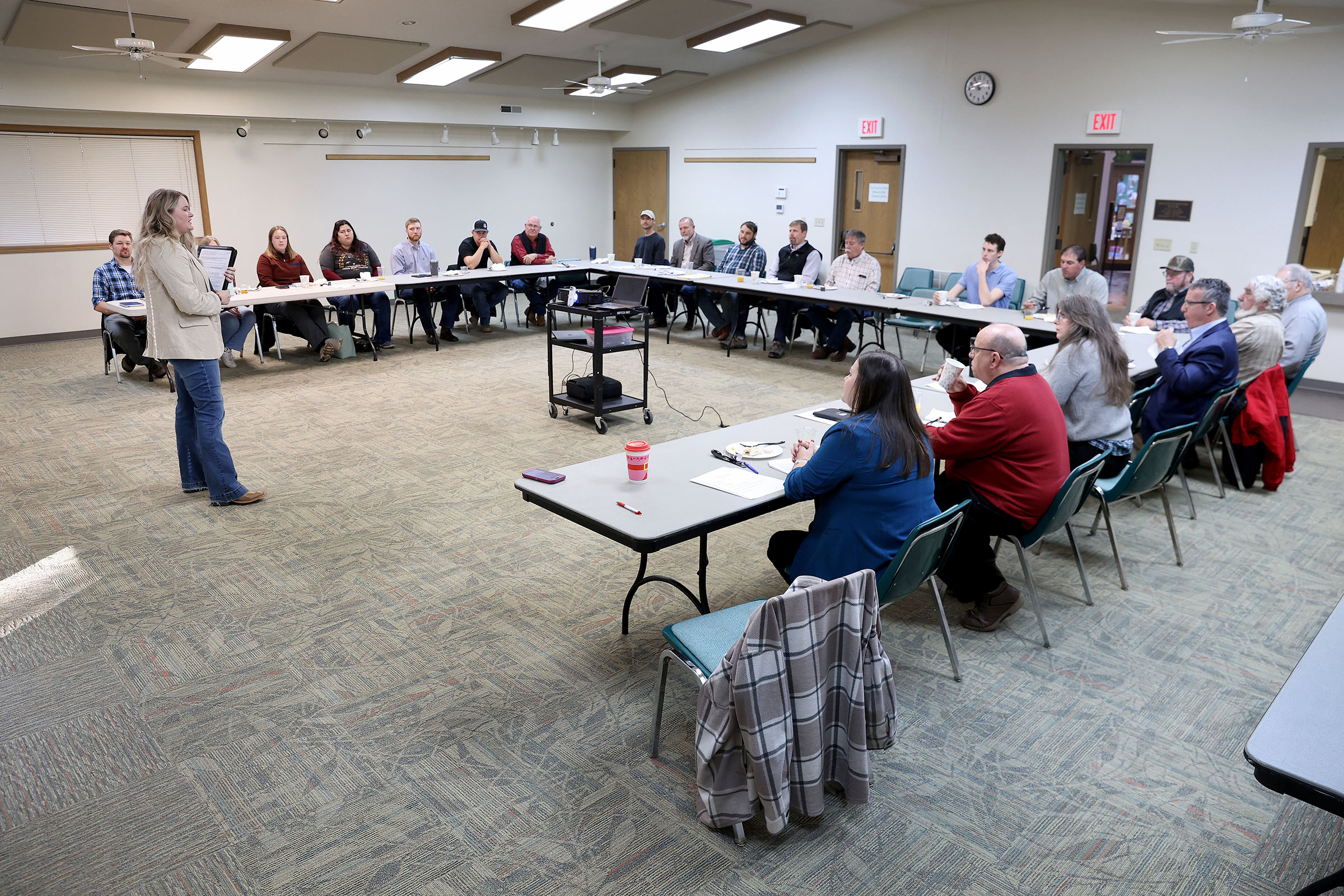
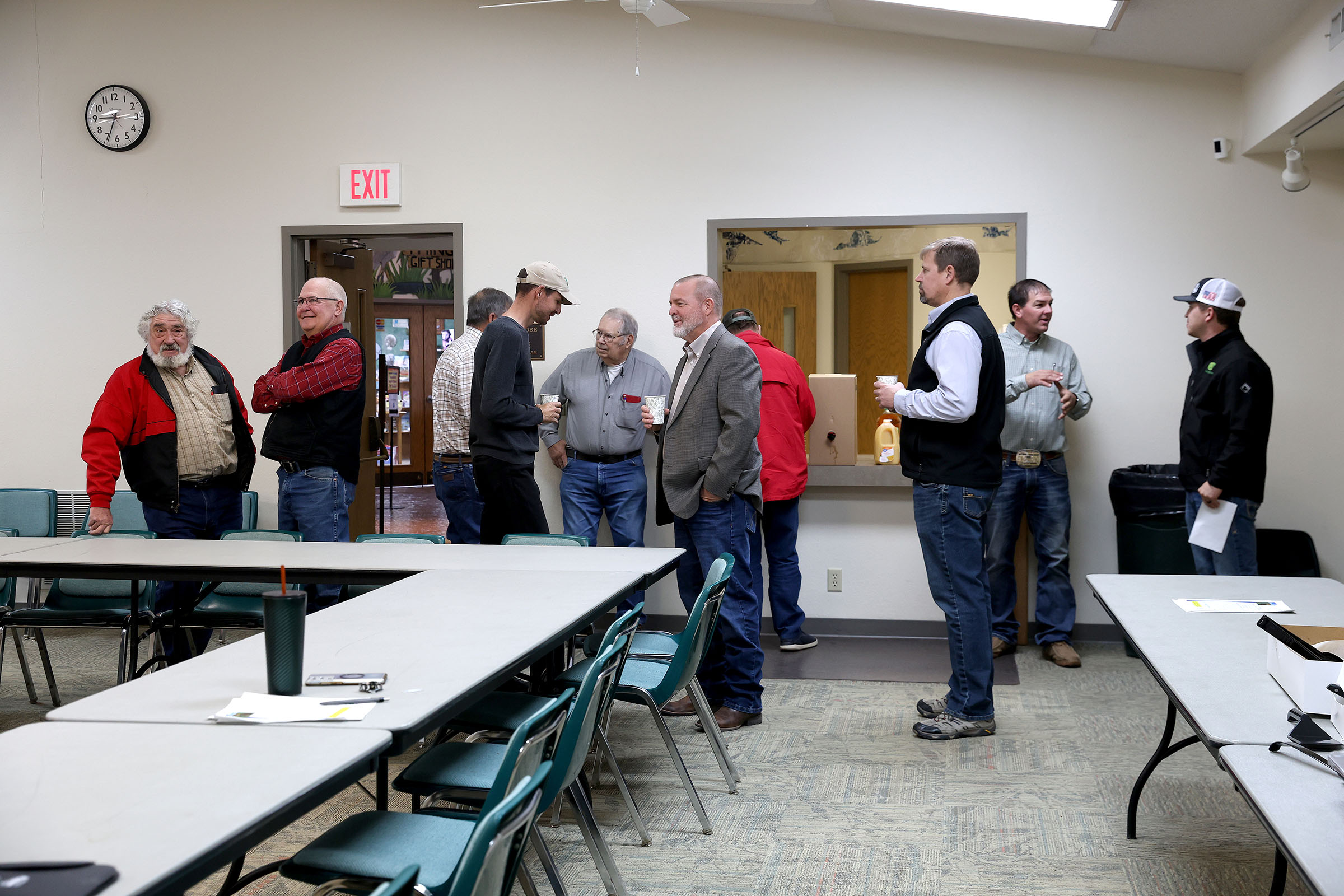
The Reno County Conservation District’s Annual Legislative Breakfast on December 18, 2025, at Dillon Nature Center, brought together producers, legislators, and community partners for a wide-ranging discussion on conservation, agriculture, and community health - and how those efforts intersect across Reno County.
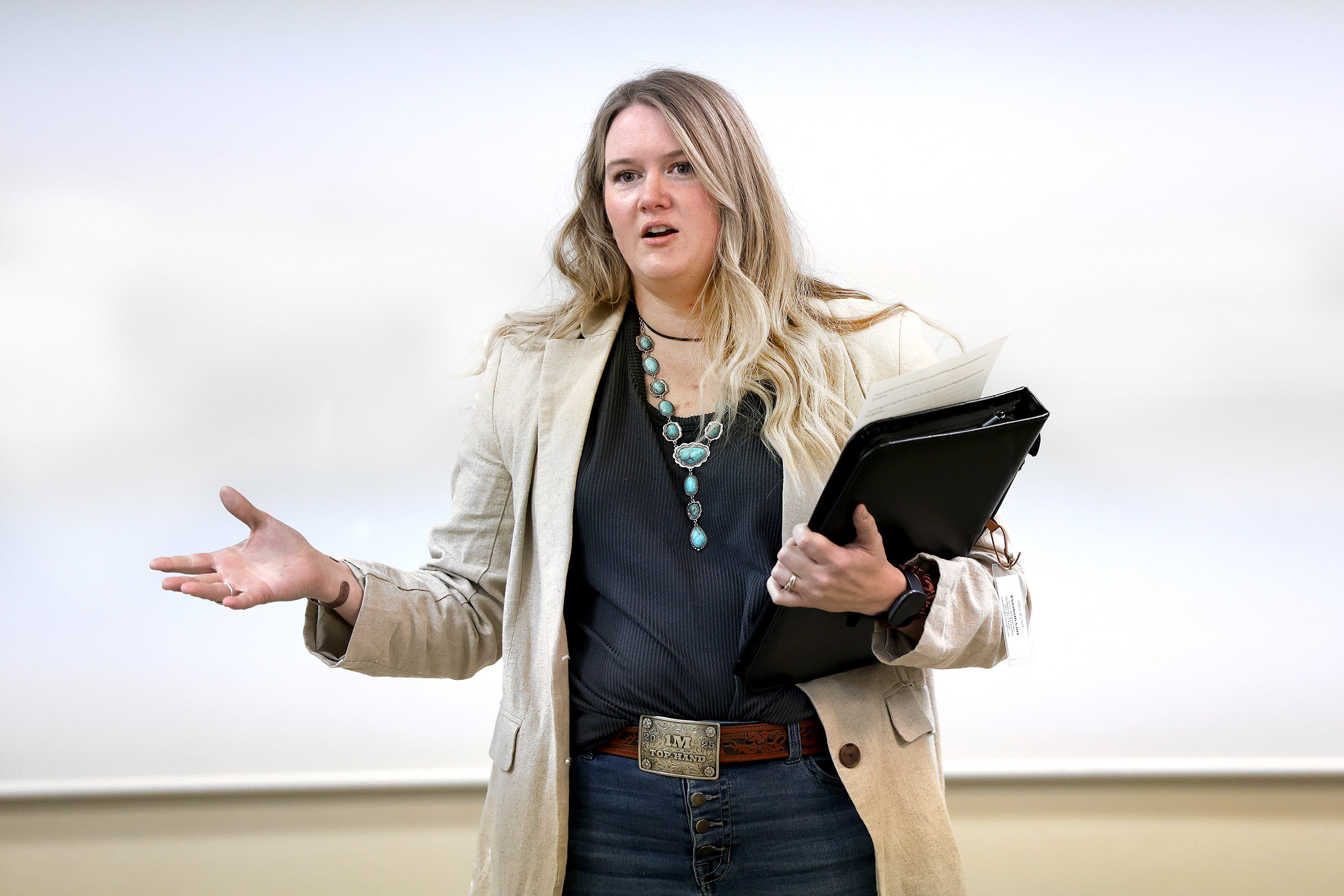 Liz Lutz
Reno County Conservation District Manager Liz Lutz opened the breakfast by emphasizing that conservation success depends on more than funding alone. While the district continues to support projects such as watering systems, cross-fencing, and pipelines that help integrate livestock and improve soil health, participation remains the key driver.
“We can offer all the programs and cost-share in the world,” Lutz said, “but without producers who want to participate, none of it works.” She stressed that community engagement and long-term commitment are essential to protecting natural resources for future generations.
Three speakers were featured at the event: Chloe Gehring, Project Manager at Cheney Lake Watershed, Kara Bunce, Health Educator at the Reno County Health Department, and Caleb Yoder, a local producer and Cheney Lake Watershed board member. Legislators in attendance were Mike Zamrzla, Deputy State Director, Office of U.S. Sen Jerry Moran, Kansas Representative Joe Seiwert District 101, Reno County Commission Chairman Don Bogner and Reno County Commission Co-Chairman Ron Hirst.
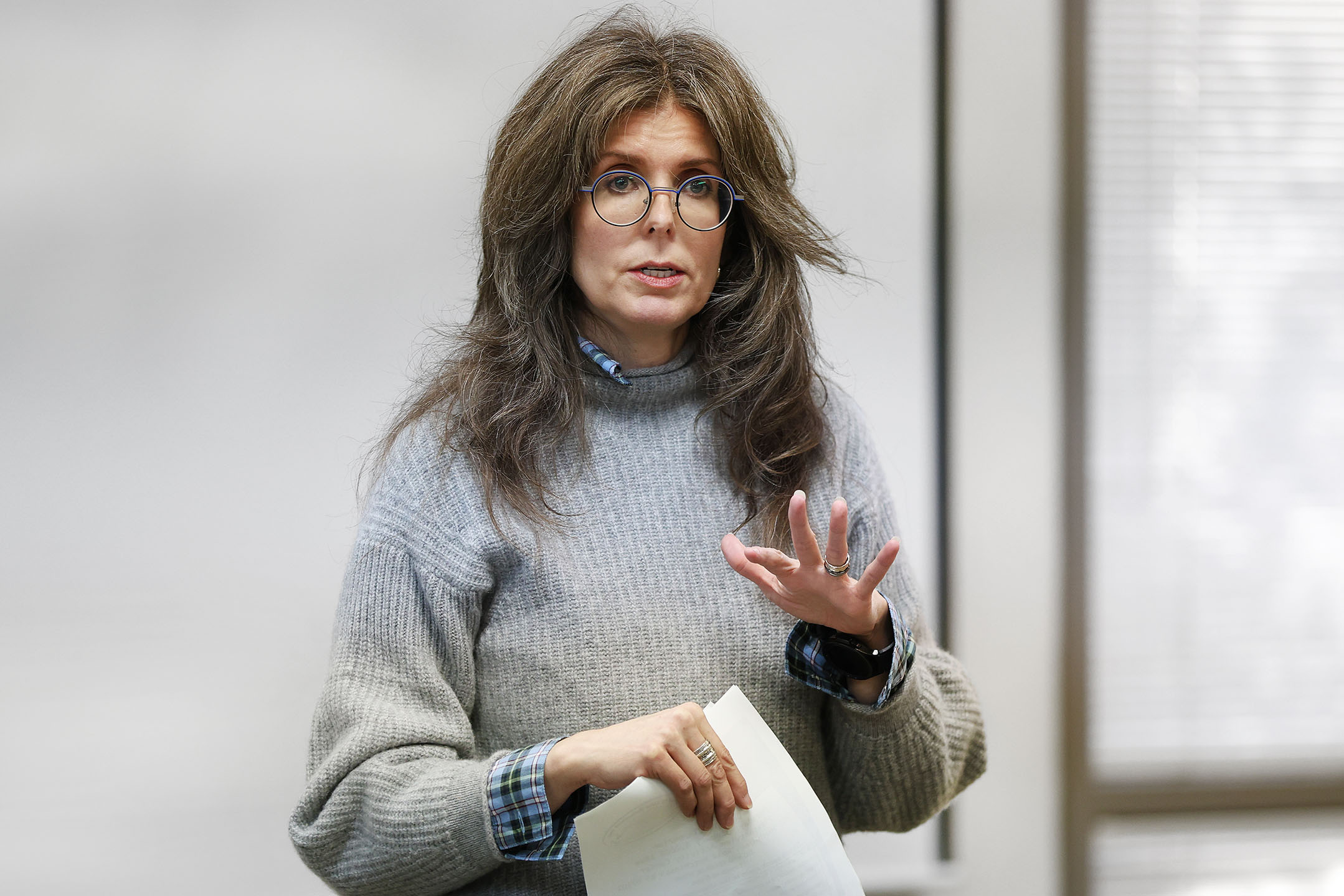 Chloe Gering
Chloe Gehring, Project Manager for the Cheney Lake Watershed, highlighted how voluntary, incentive-based conservation programs have delivered meaningful results across a large, predominantly agricultural footprint. She explained that the watershed’s long-standing partnership with the City of Wichita - one of the region’s primary drinking water users - has created opportunities to leverage funding and expand conservation impact.
“When we work together and leverage our partners’ funding, our impact becomes much bigger than any one program alone,” Gehring said. She also underscored the importance of technical support, noting, “None of this work happens without staff in the field helping producers walk through these programs.”
Gehring shared that recent conservation efforts, when combined with state, federal, and producer investments, represent hundreds of thousands of dollars in on-the-ground improvements, demonstrating how collaboration multiplies results.
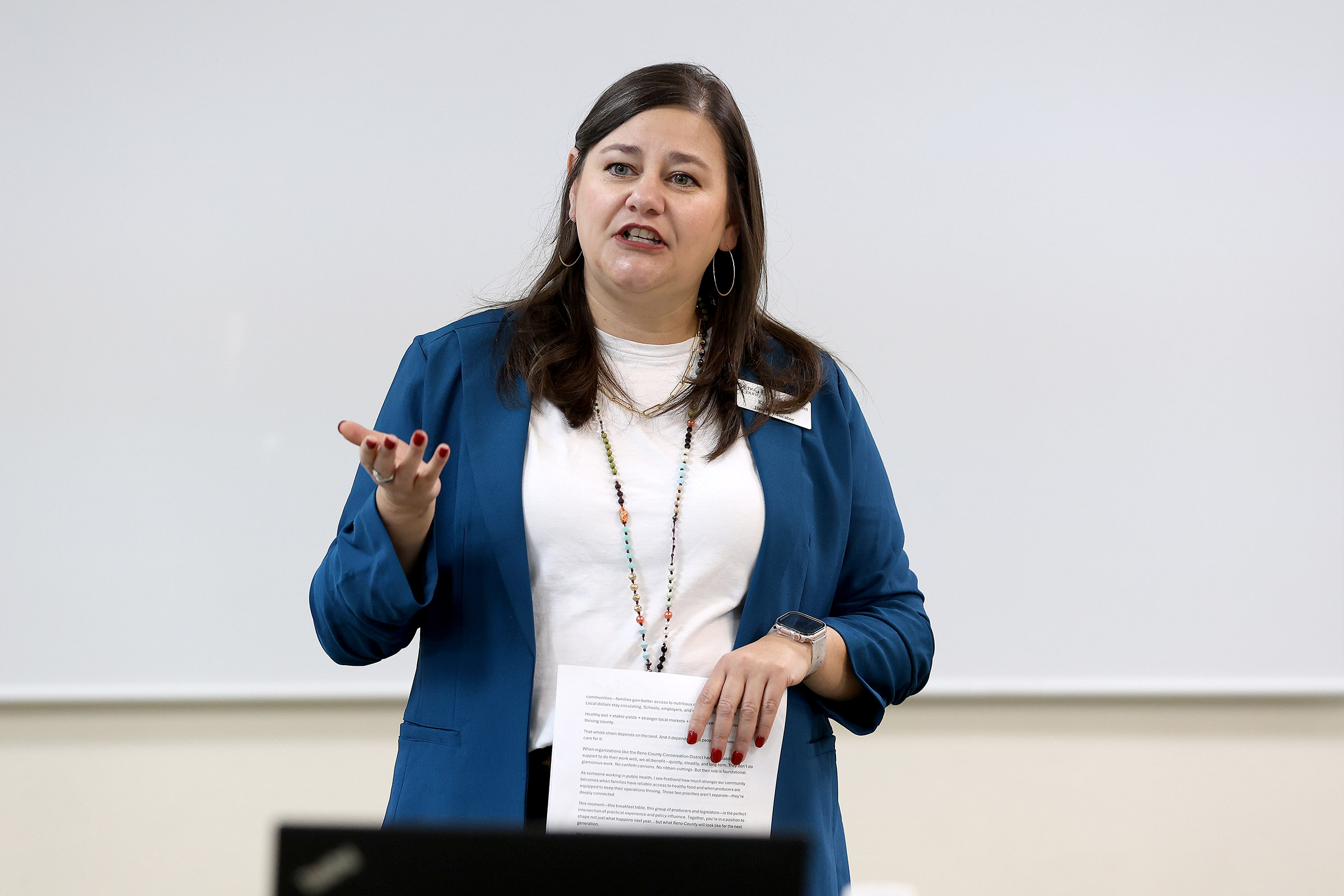 Kara Bunce
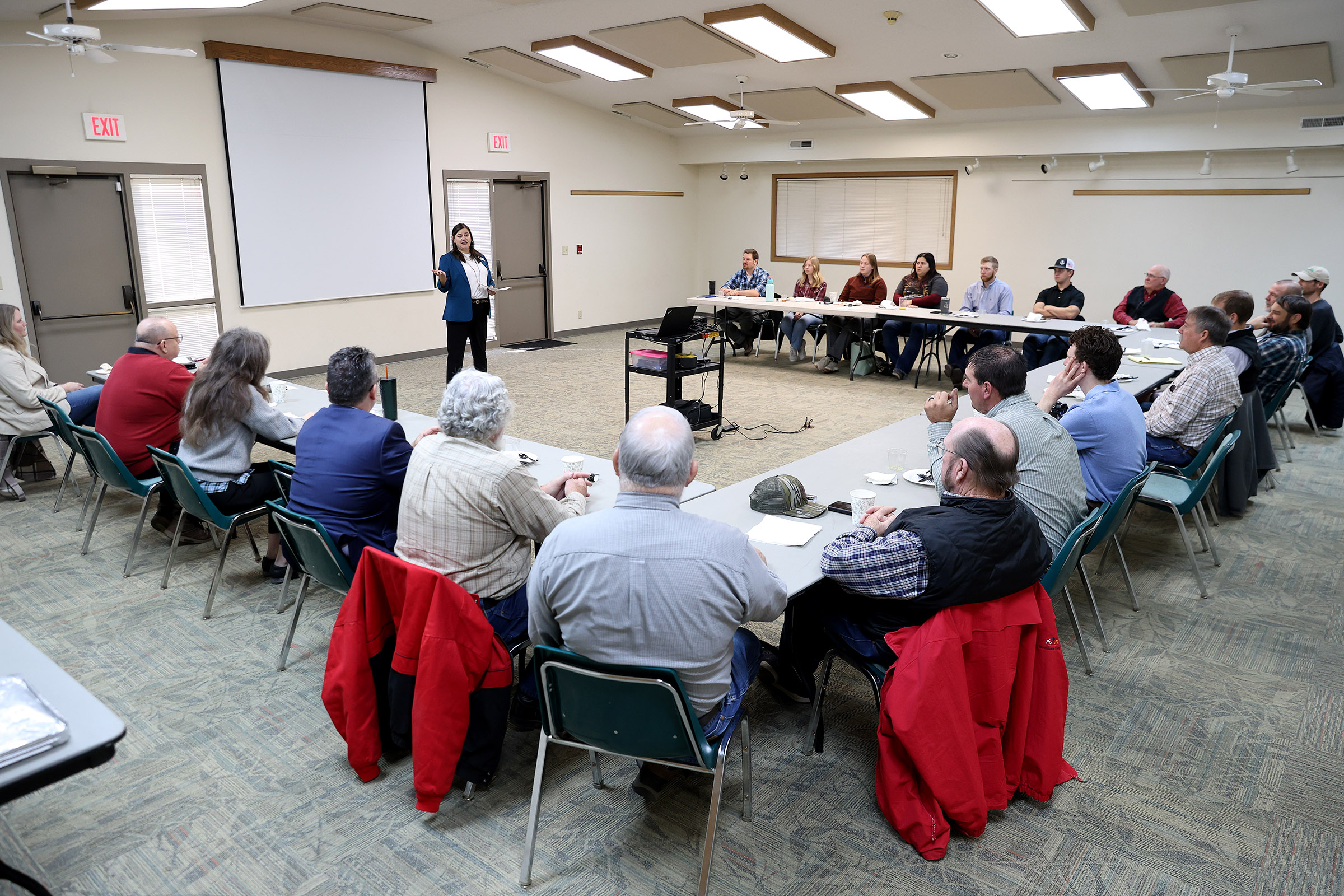 Kara Bunce
Bringing a public health perspective, Kara Bunce, Health Educator with the Reno County Health Department, connected conservation directly to food security and family well-being. She described her work on the county’s Food Advisory Council and the recent completion of a local food system assessment aimed at identifying gaps and opportunities.
“When land is healthy, our local food system is stronger,” Bunce said, “and that directly supports healthier families and communities.” She noted that while conservation work often happens quietly, its effects are far-reaching: “Conservation may be behind the scenes, but it’s foundational to public health.”
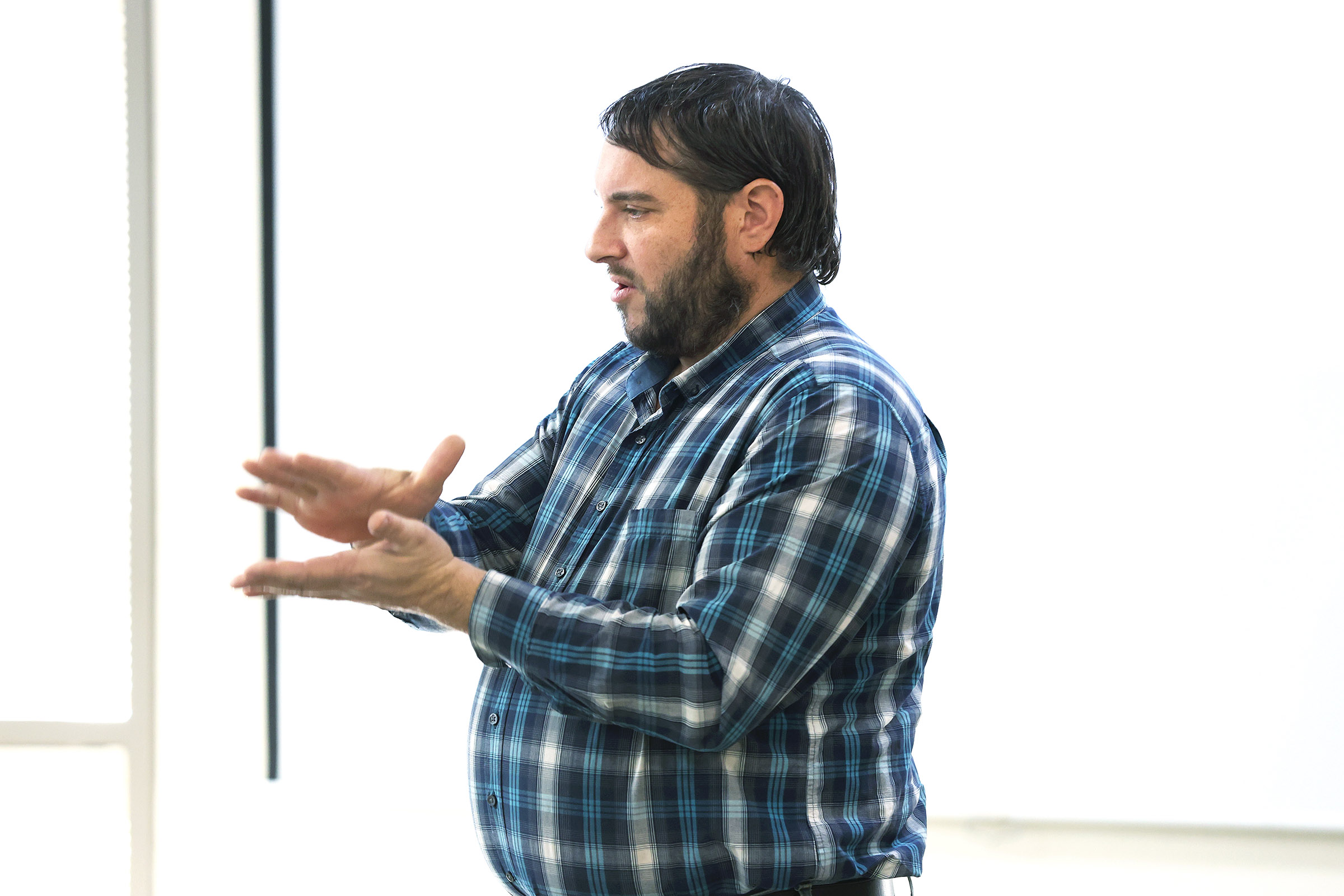 Caleb Yoder
 Caleb Yoder
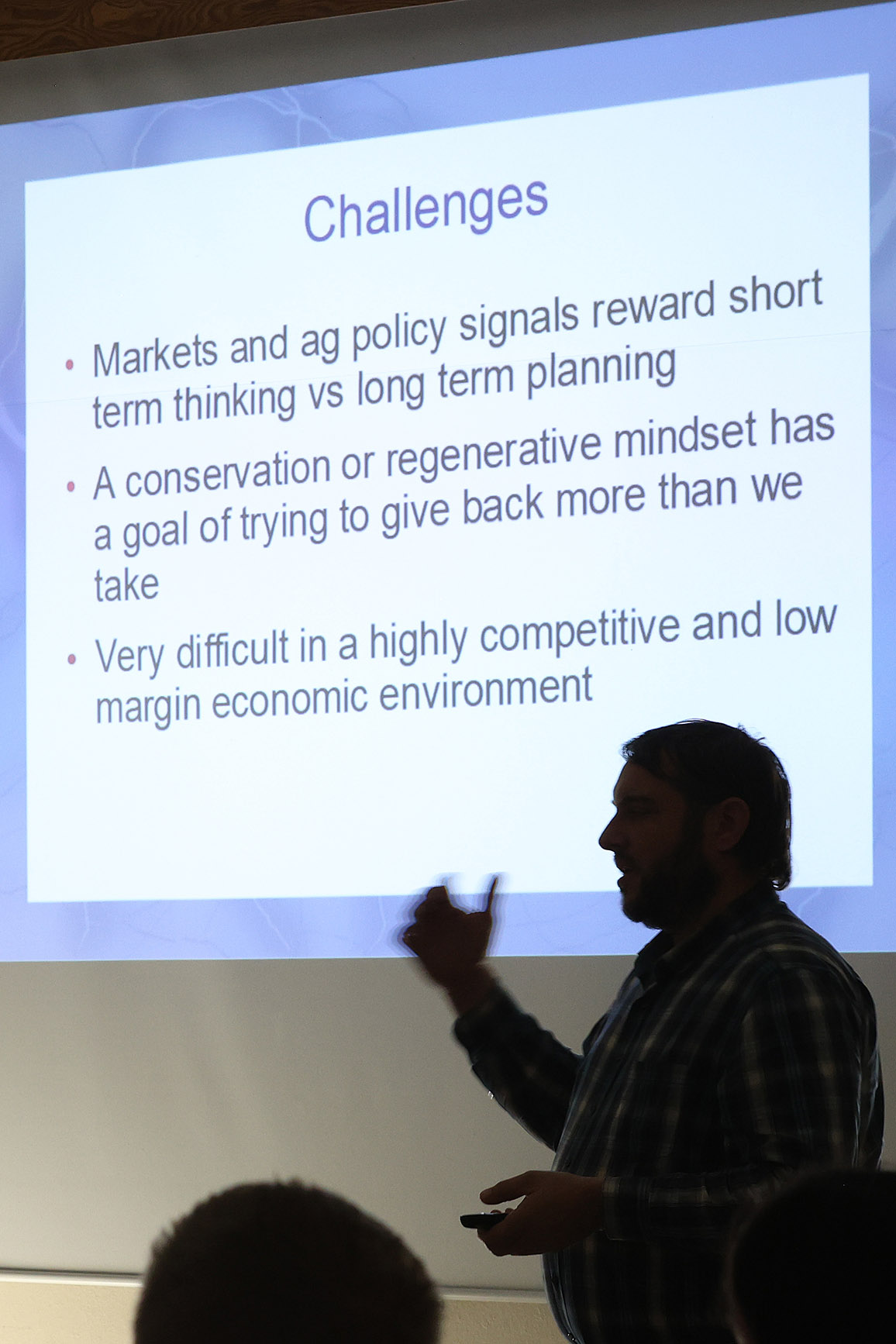
The producer perspective came from Caleb Yoder, a local farmer and Cheney Lake Watershed board member, who shared firsthand experiences adopting regenerative practices on his family’s operation. With support from conservation programs, Yoder said his farm was able to experiment with cover crops, rotational grazing, and shared equipment without taking on excessive risk.
“Cost-share is helpful,” Yoder said, “but education is the biggest return on investment.” He emphasized that discussion groups, workshops, field days, and farmer-to-farmer coaching have been just as valuable as financial assistance. Reflecting on long-term stewardship, Yoder added, “The question I try to ask is: how can I give back to the land more than I take from it?”
Throughout the breakfast, speakers returned to common themes: conservation works best when it is voluntary and locally led; education and technical assistance are critical to long-term success; and healthy soil and water systems support not only agriculture, but public health and economic resilience as well.
The event concluded with appreciation for the partnerships, producers, and policymakers who continue to support conservation efforts in Reno County—and a shared commitment to building a healthier landscape for generations to come.
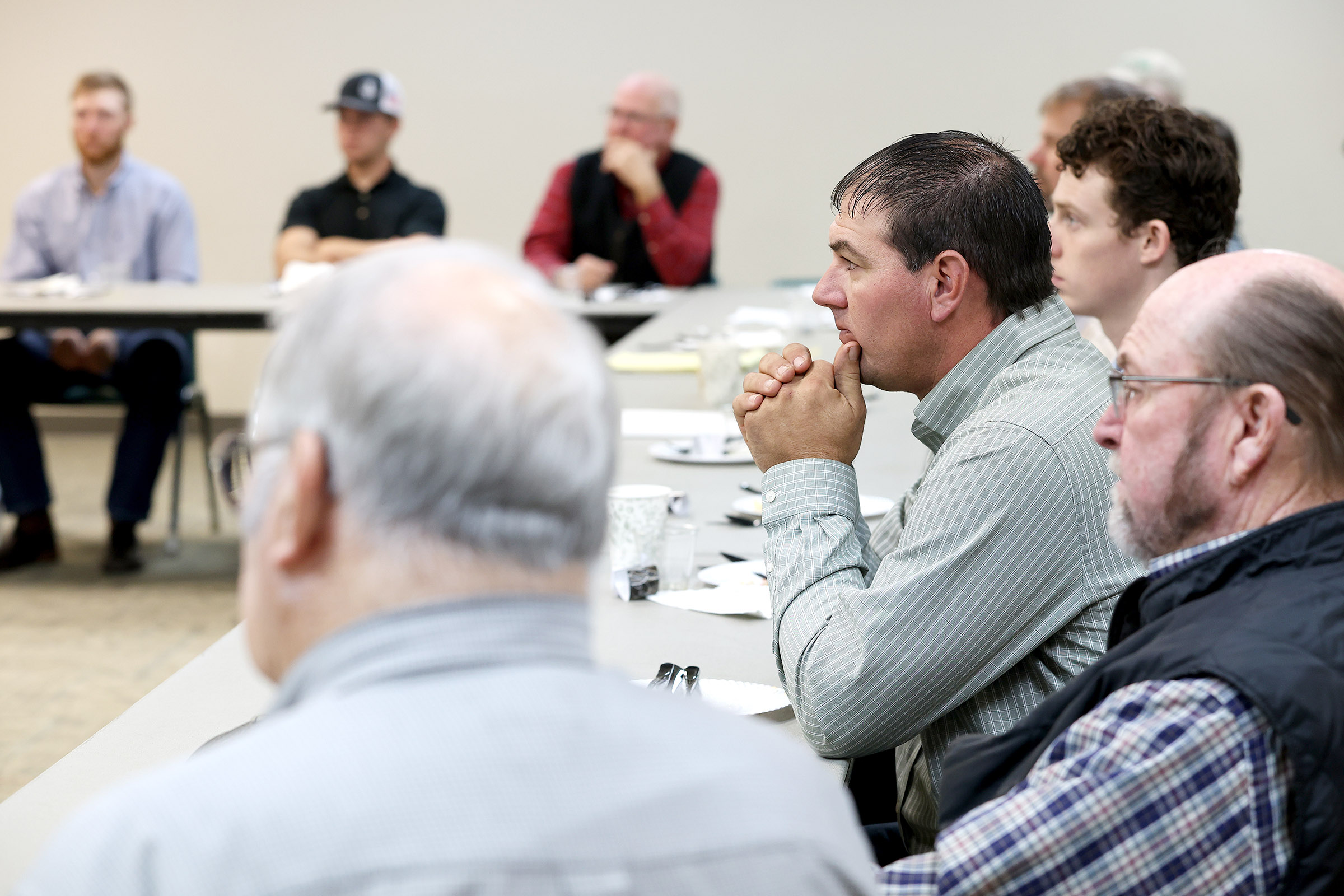 Chad Basinger, local producer and Chairperson of the Reno County Conservation District.
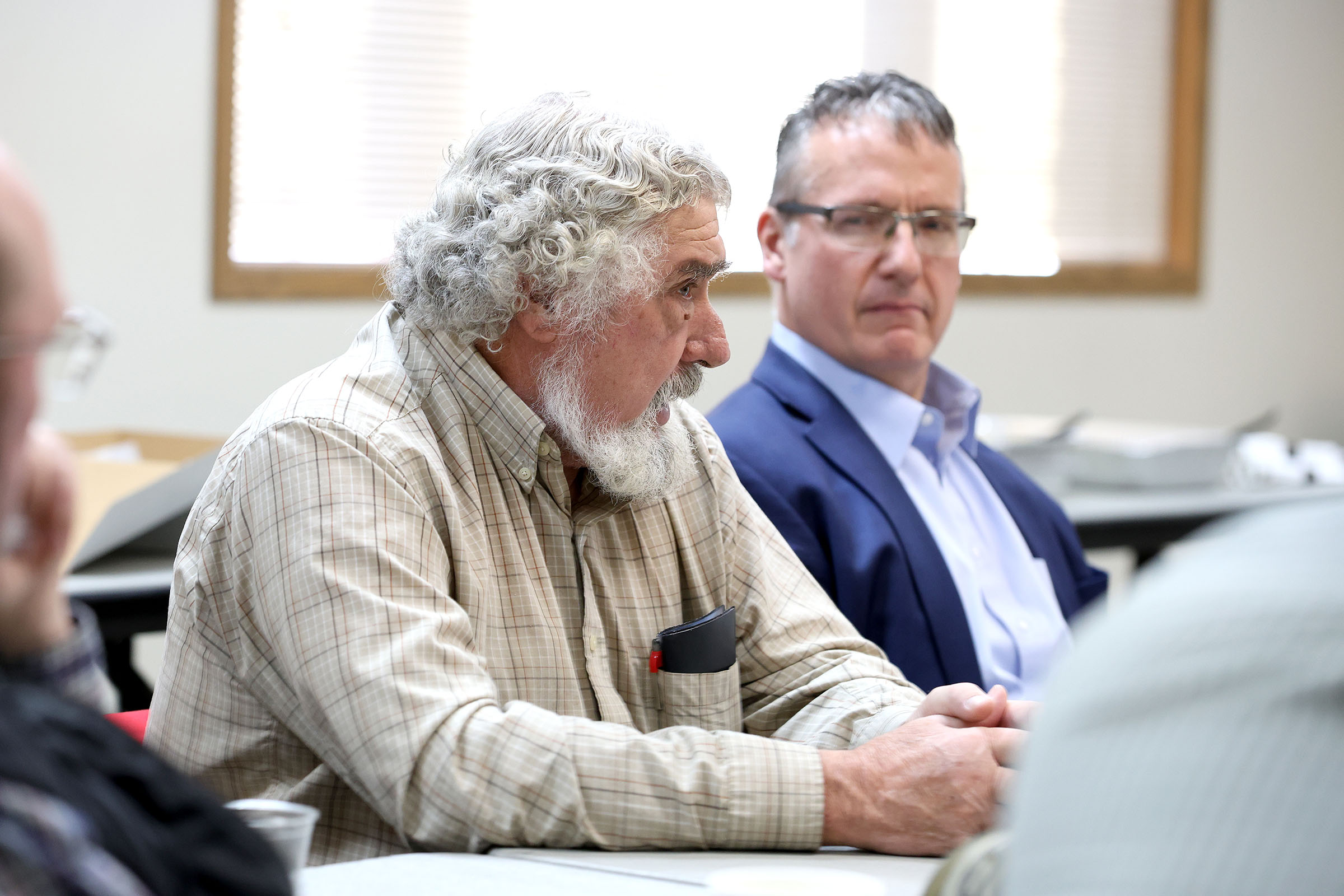 Reno County Commission Chairman Don Bogner, left, with Mike Zamrzla, Deputy State Director, Office of U.S. Sen Jerry Moran.
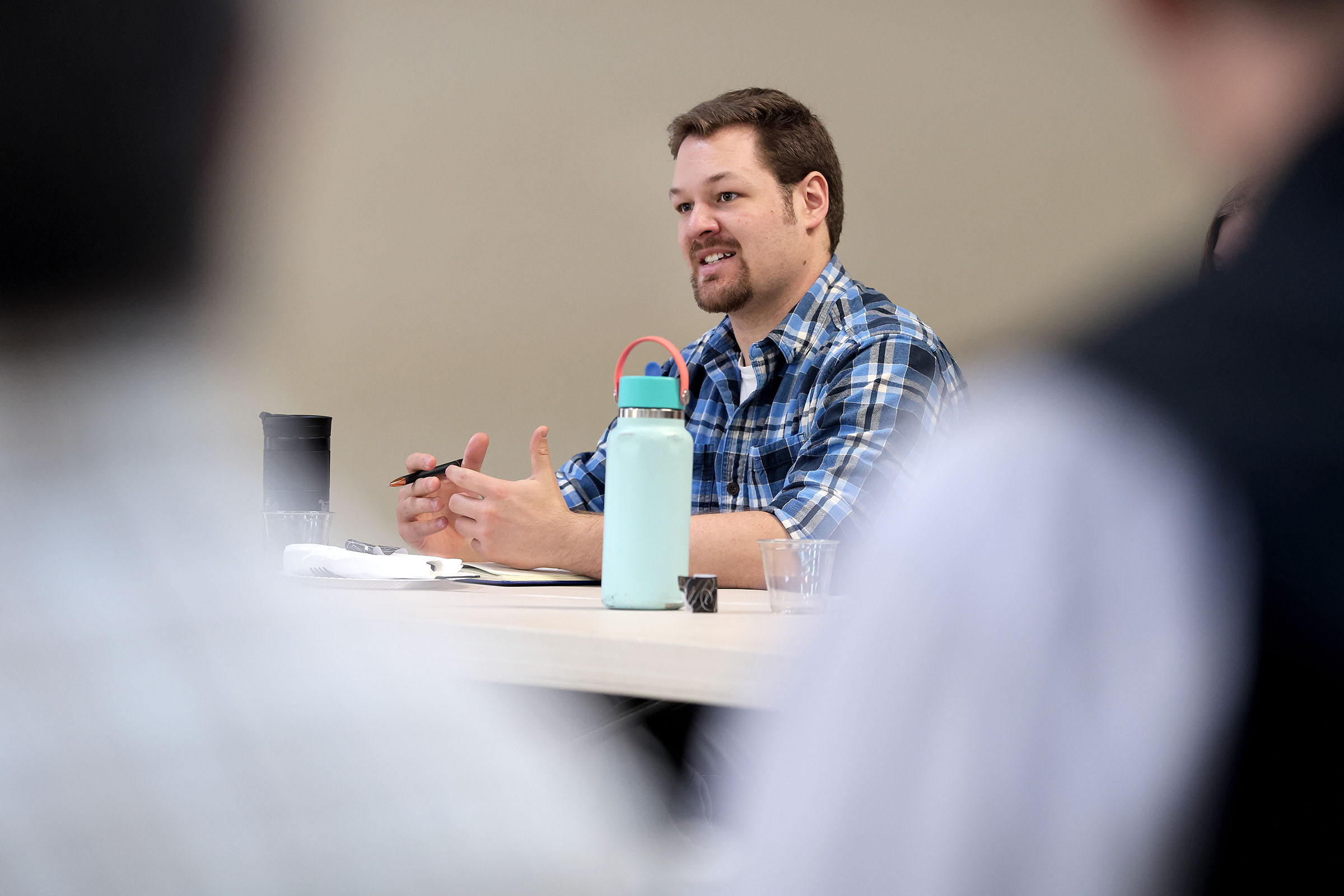 Garrett Smith - Regenerative Ag Coordinator with Cheney Lake Watershed.