View All
Commissioners hear overview of Five-Year Economic Development Strategy from Amy Holloway of Aha! Advisors
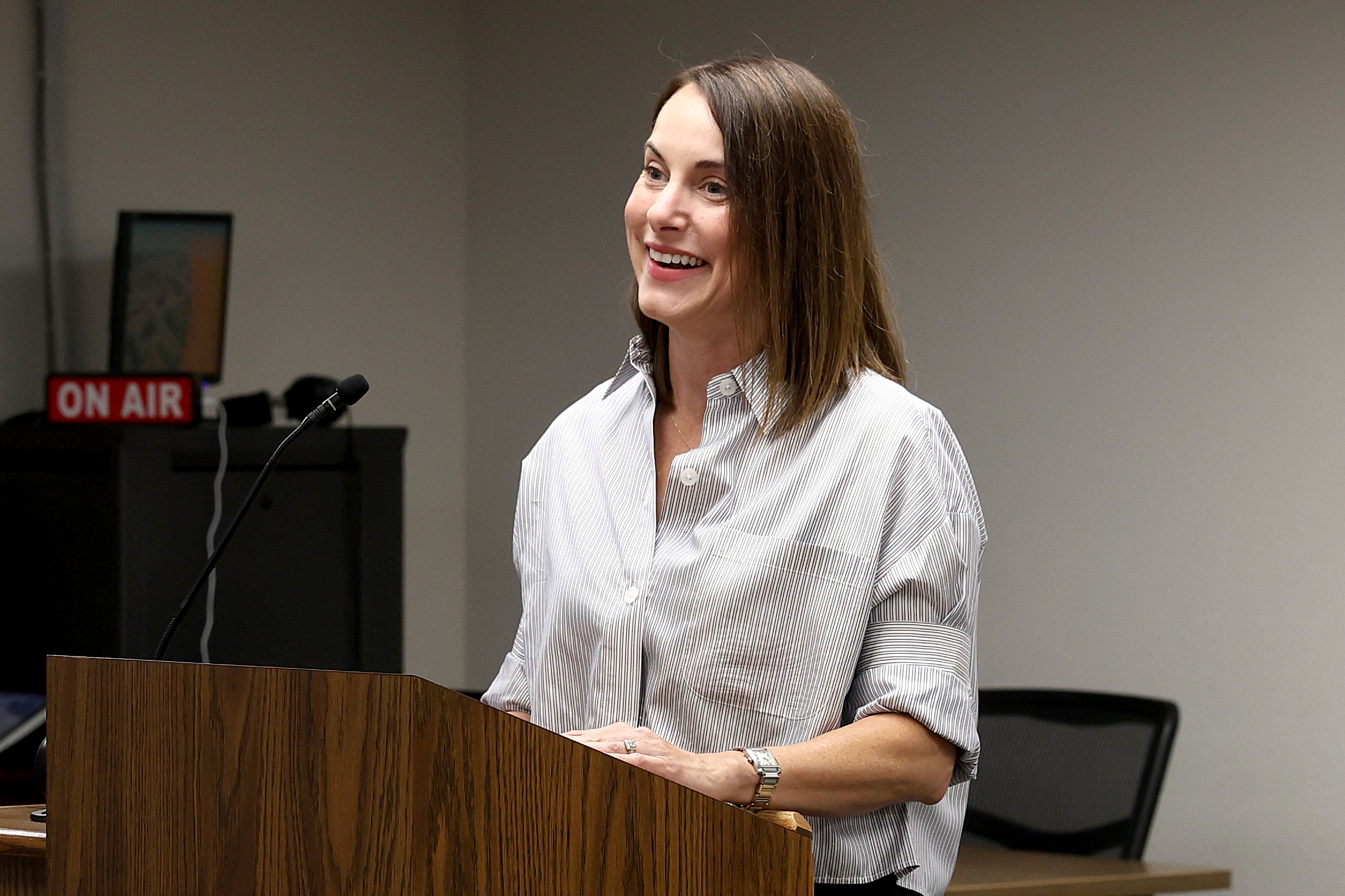
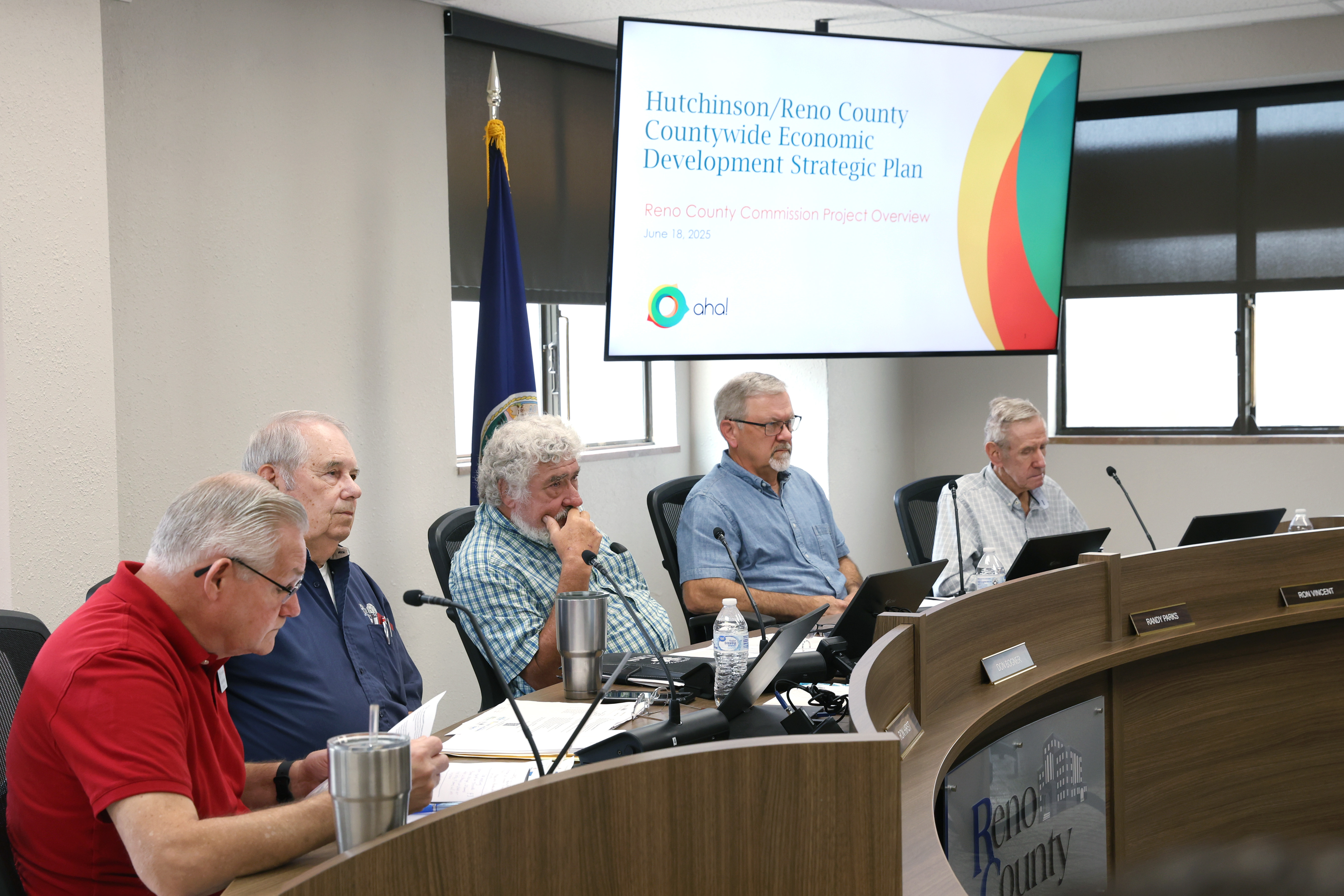
Amy Holloway, a seasoned economic development strategist with three decades of experience and founder of Aha! Advisors, was introduced to Reno County Commissioners during their budget study session at the courthouse Wednesday morning. Holloway is the facilitator for Reno County’s new Economic Development Strategic Plan and gave commissioners an overview of the plan.
Holloway explained to commissioners that the goal of this initiative is to develop a comprehensive, county-wide strategy that will guide economic development efforts through the next five years. She said that this strategy will emphasis both data-driven analysis and meaningful community involvement. She stressed the importance of gathering a wide range of perspectives and ensuring that the final strategy is not only technically sound but also rooted in the lived experiences and aspirations of the community.
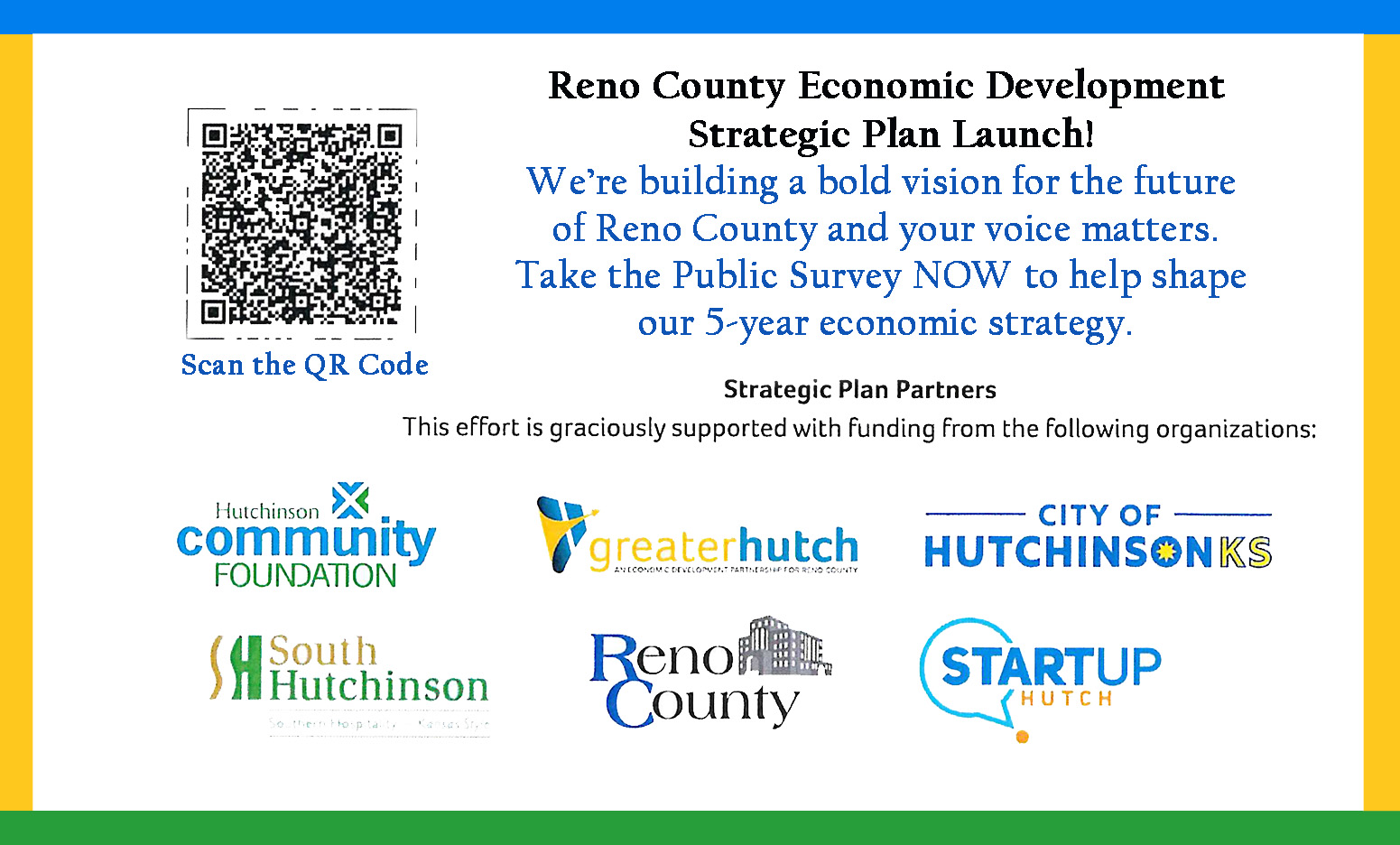
The project began in earnest last month, with preliminary research and background review. Now, in June, the focus has shifted to stakeholder engagement. This week alone is packed with focus groups involving educators, government partners, business incubators, nonprofit leaders, and elected officials. These early discussions are part of a broader effort to hear from as many voices as possible. One of the tools being used to engage the broader public is an online community survey, which launched on June 2 and will remain open through July 1. With 175 responses already submitted, the team hopes to see even more participation, encouraging community members to share the survey opportunity through newsletters, social media, and direct contact. To take the survey, go to https://hubs.ly/Q03qLJc60.
Supporting the effort is an advisory committee made up of 10 to 12 public, private, and nonprofit leaders from across the county. Holloway is meeting with this group every two weeks and will lead an in-depth workshop with them in August to begin defining the strategy’s goals and action steps. Her next visit to Reno County will be on August 19 and 20, during which additional workshops and strategy sessions will take place.
Behind the scenes, Holloway’s research team is conducting a benchmarking analysis, comparing Reno County to 10 to 12 peer counties with similar demographics and economic profiles across Kansas and neighboring states. These comparisons are based on factors like population size, educational attainment, industry composition, and income levels. The analysis includes 30 to 35 different performance metrics, which will help identify Reno County’s strengths and areas for improvement. This kind of comparative data is essential for shaping a strategy that is both aspirational and grounded in reality.
The strategy aims to provide not just a vision, but also clarity on roles and responsibilities across different sectors — including the public sector, the business community, chambers of commerce, and nonprofits. Holloway highlighted the need for alignment, noting that even when these groups don’t interact daily, a shared vision and coordinated goals can help everyone move in the same direction.
To wrap up her overview, Holloway shared a look at the week’s packed agenda, which includes not only focus groups and meetings but also a public session scheduled for that Wednesday evening from 5 to 7 PM. This event is designed to be interactive, with attendees invited to respond to specific questions, offer insights, and connect one-on-one with Holloway and her team. All of these efforts — from surveys to focus groups to interviews — are aimed at ensuring that the strategy reflects the community’s needs and positions Reno County for a vibrant economic future.
At the start of this economic development process, Holloway invited the commissioners to share their ideas on what the best possible outcome of the strategy would look like. Commissioner Randy Parks responded by emphasizing the importance of a comprehensive approach. He said he wanted Holloway and her team to not only focus on subjects including increasing housing, jobs, income, and childcare, but also to ensure that the strategy delivers meaningful benefits to all communities across Reno County.
The Project Overview:
The initiative is a county-wide economic development strategy for Reno County.
The strategy aims to guide economic development efforts for the next five years.
The approach is grounded in:
Robust community engagement
Objective data and benchmarking analysis
📅 Timeline and Phases
May: Project setup – background research and preparation.
June: Stakeholder engagement phase begins.
June (ongoing):
Benchmarking analysis comparing Reno County to 10-12 similar counties in neighboring states.
July–August: Strategy writing phase.
October: Final strategic plan unveiled.
🔍 Engagement Activities
Focus Groups (started this week): ~120 participants from diverse community sectors.
Community Survey:
Launched June 2, open through July 1.
Already has 175 responses.
Promoted through QR code flyers, social media, and email newsletters.
Advisory Committee:
10–12 leaders from public, private, and nonprofit sectors.
Meeting biweekly.
Will participate in a 2.5-hour strategy workshop in August.
Public Session: Scheduled this Wed., June 18th in the evening from 5–7 PM for direct community input.
📊 Benchmarking & Research
Comparison to peer counties based on:
Population size
Educational attainment
Industry mix
Income levels
30–35 metrics being evaluated.
Purpose: Understand where Reno County excels or needs improvement to inform the strategy.
🧩 Goals and Vision
Develop a clear economic vision and actionable goals.
Promote alignment across sectors:
Local government
Business community (e.g., Chamber, Greater Hutch)
Nonprofits
Define roles and responsibilities to support coordinated action even without daily interaction.
📌 What’s Next
Continue interviews and data gathering.
Conduct targeted workshops with the advisory committee in August.
Draft the strategy by late summer, with a public reveal in fall.